
You Don't Need to Train Hard Every Day
Hard training feels productive. But it's not always effective. Progress comes from stress, recovery, and repeat. If you skip recovery, you skip improvement. Easy days are part of the plan — not a weakness.
Generate structured running sessions for road, trail, and track. Set your pace targets, training days, and goals — get a complete multi-week plan.
Generate a Free Running Plan No credit card required. Free to get started.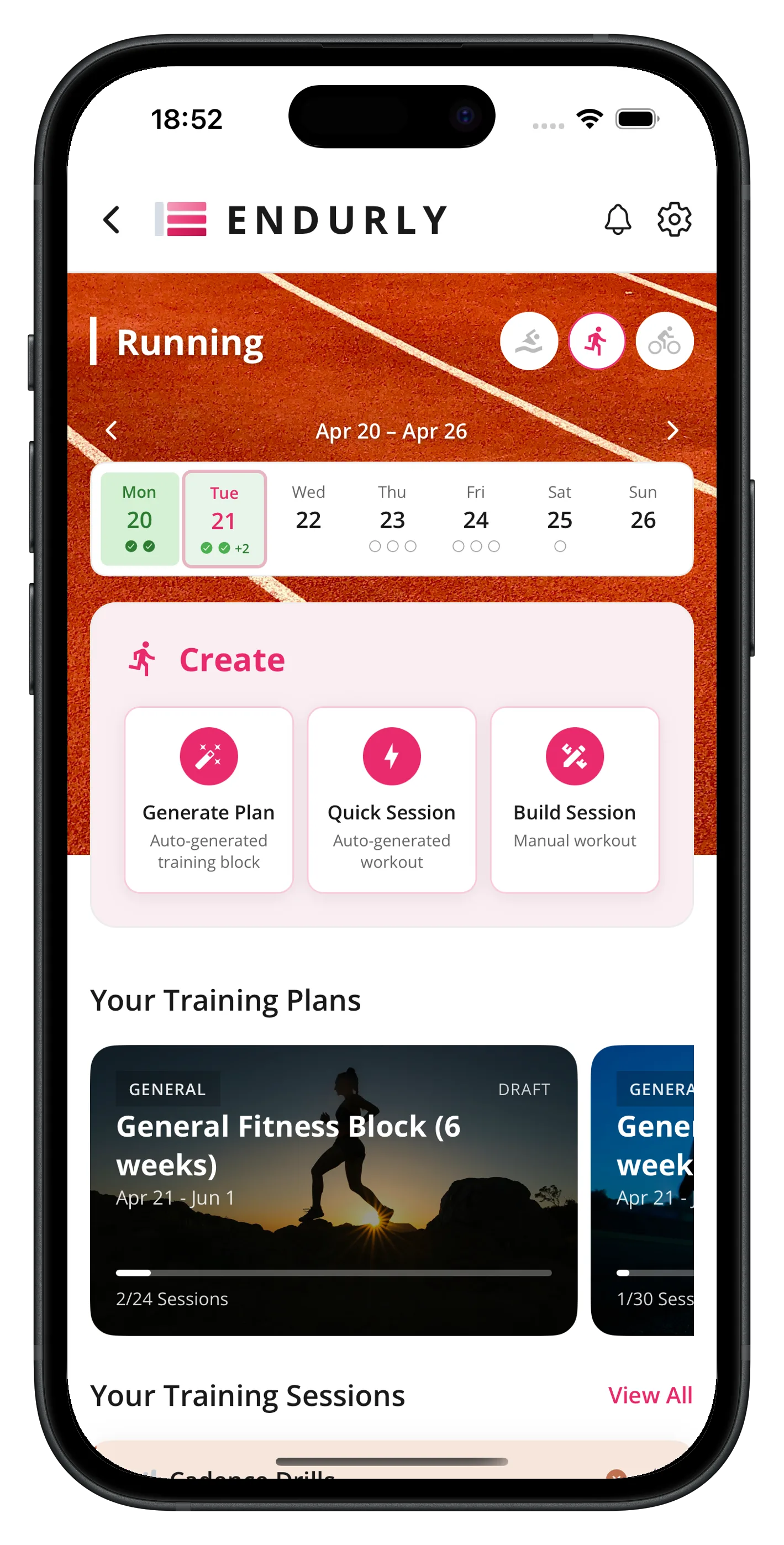
Features
Sessions are structured with HR zone targets and effort levels. Easy, moderate, and hard efforts are clearly defined for every interval.
Tempo runs, fartlek, track intervals, and hill repeats — generated with proper warm-up, main set, and cool-down structure.
Training blocks build in intensity and volume week over week, following proven periodization principles for sustainable improvement.
Specify road, trail, or mixed terrain. Sessions adapt their structure and intensity guidance based on your running environment.
App Screenshots
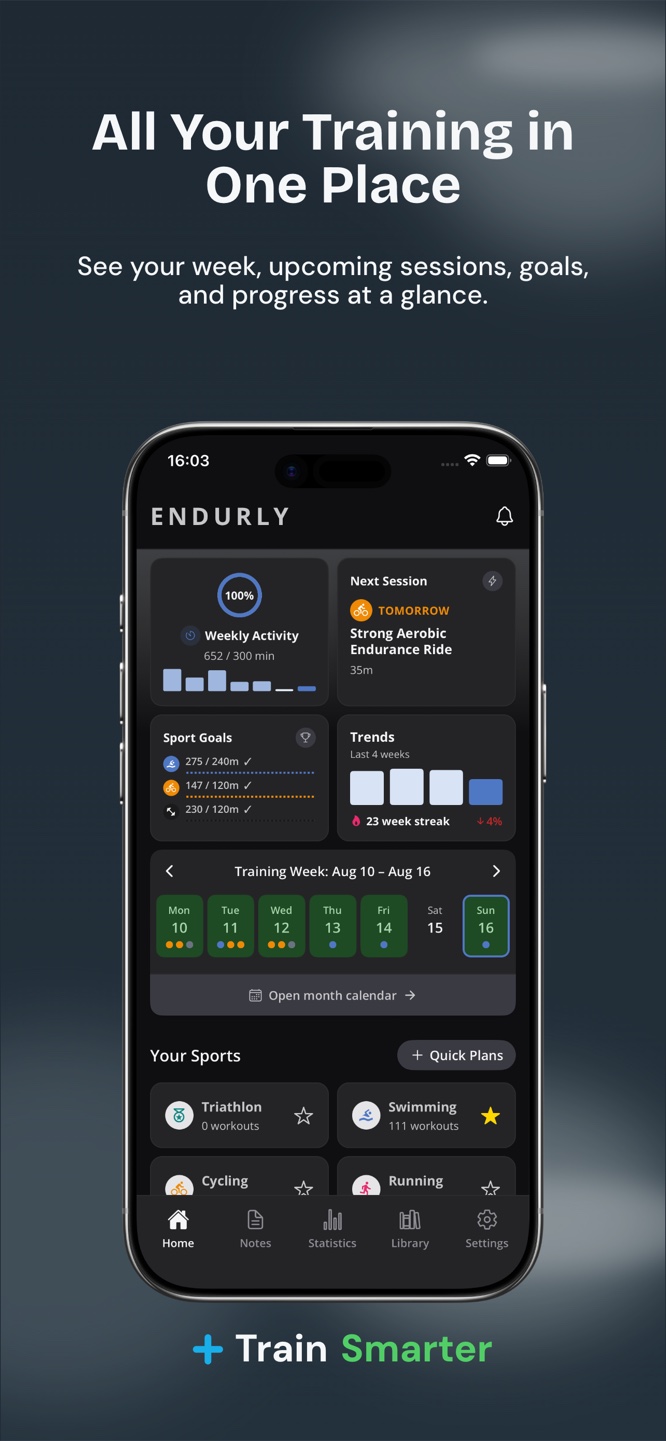
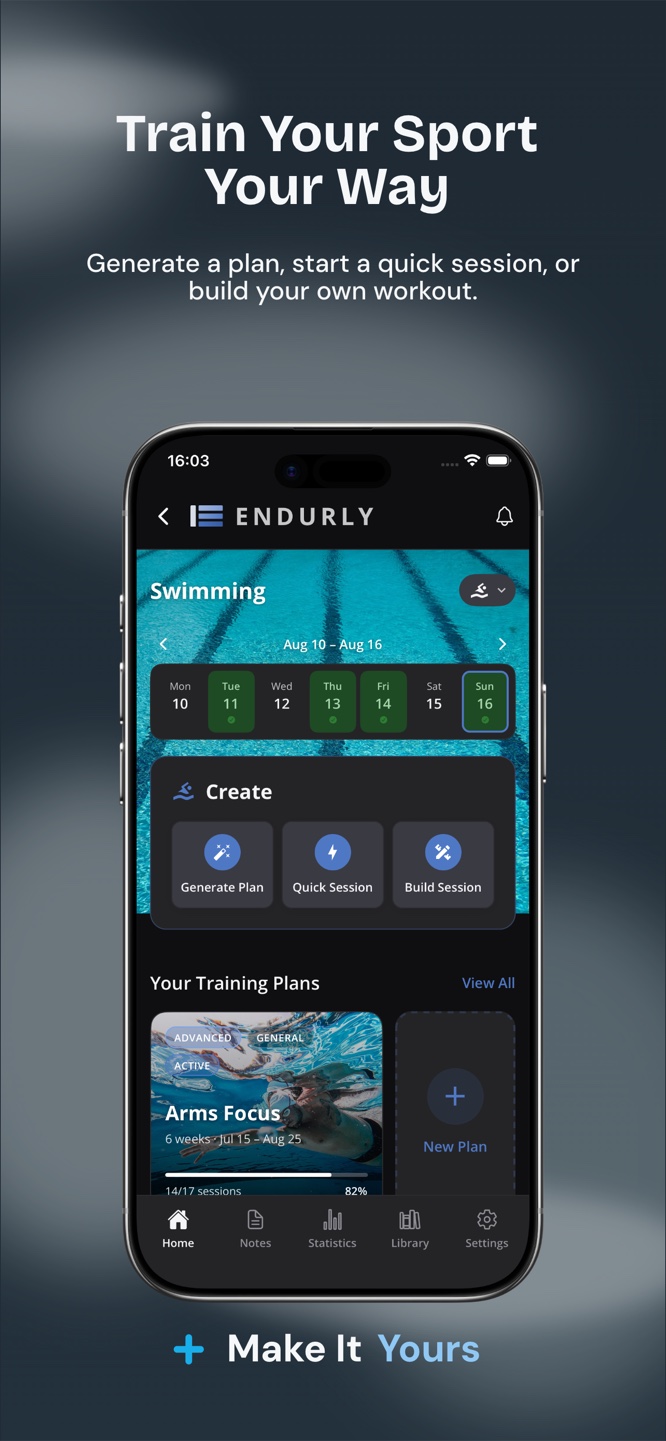
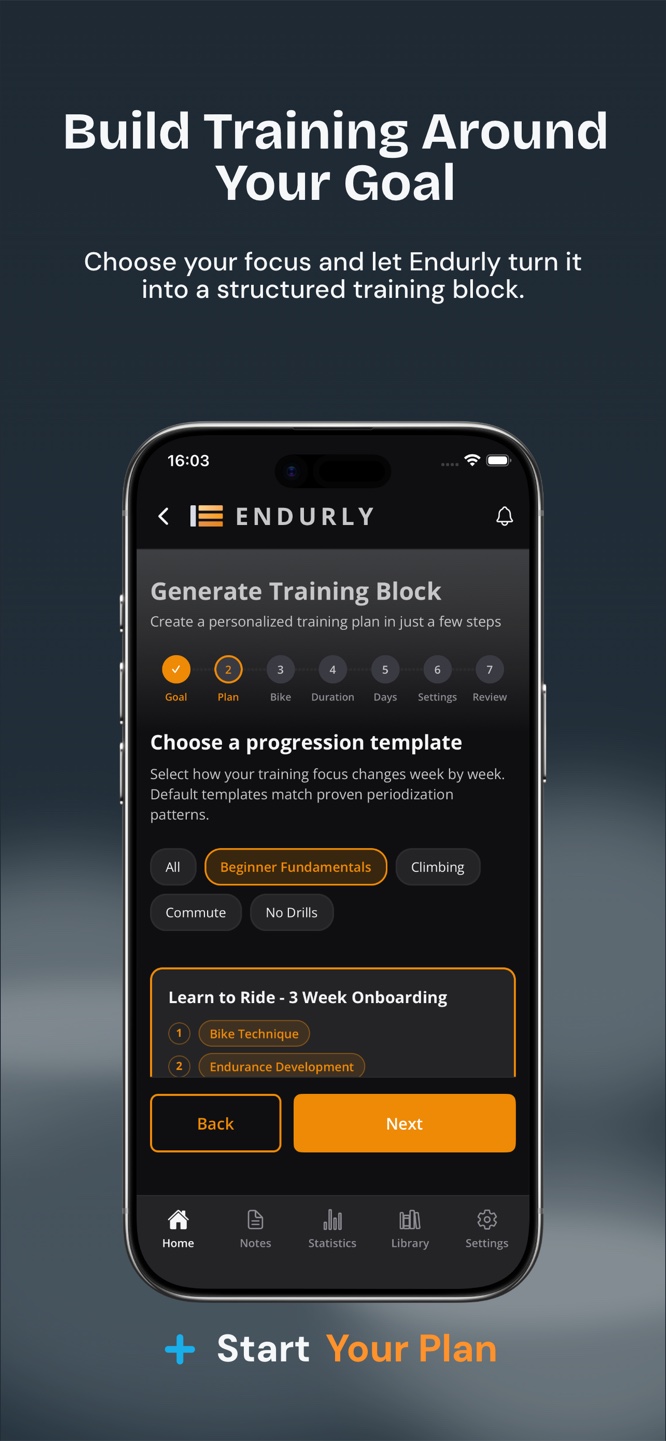
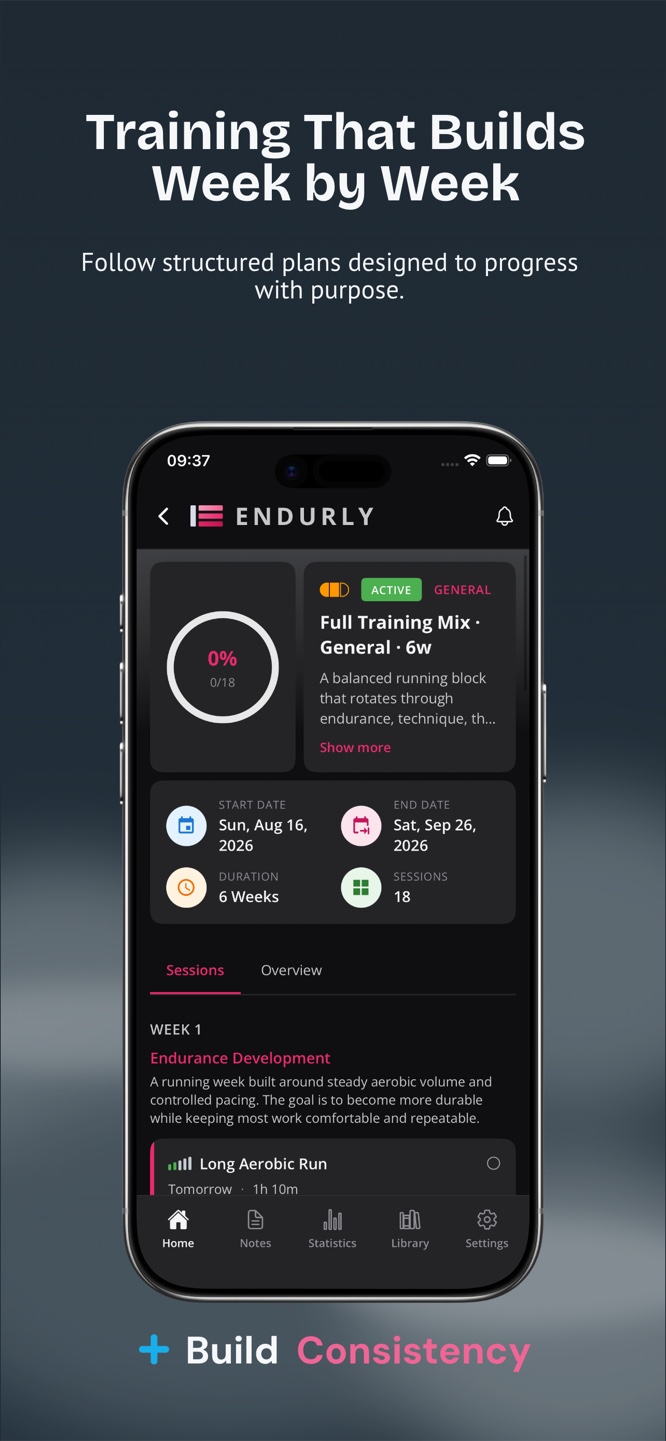
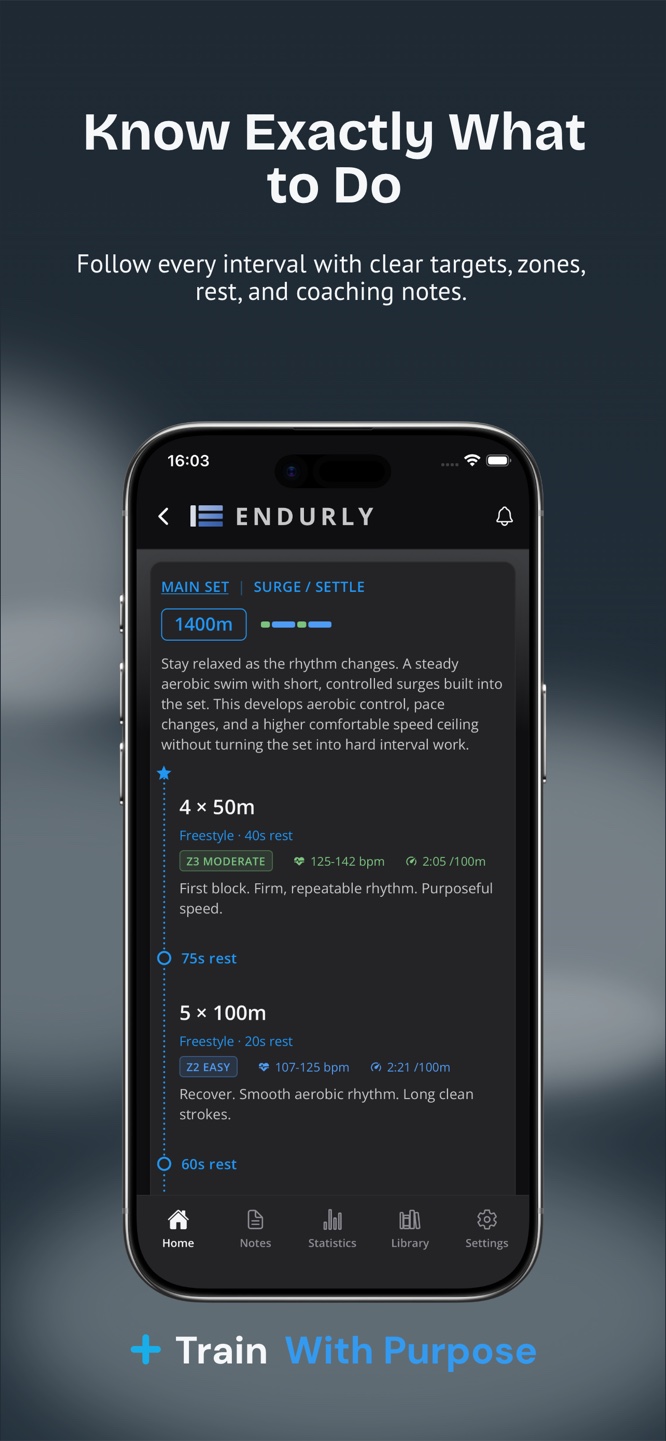
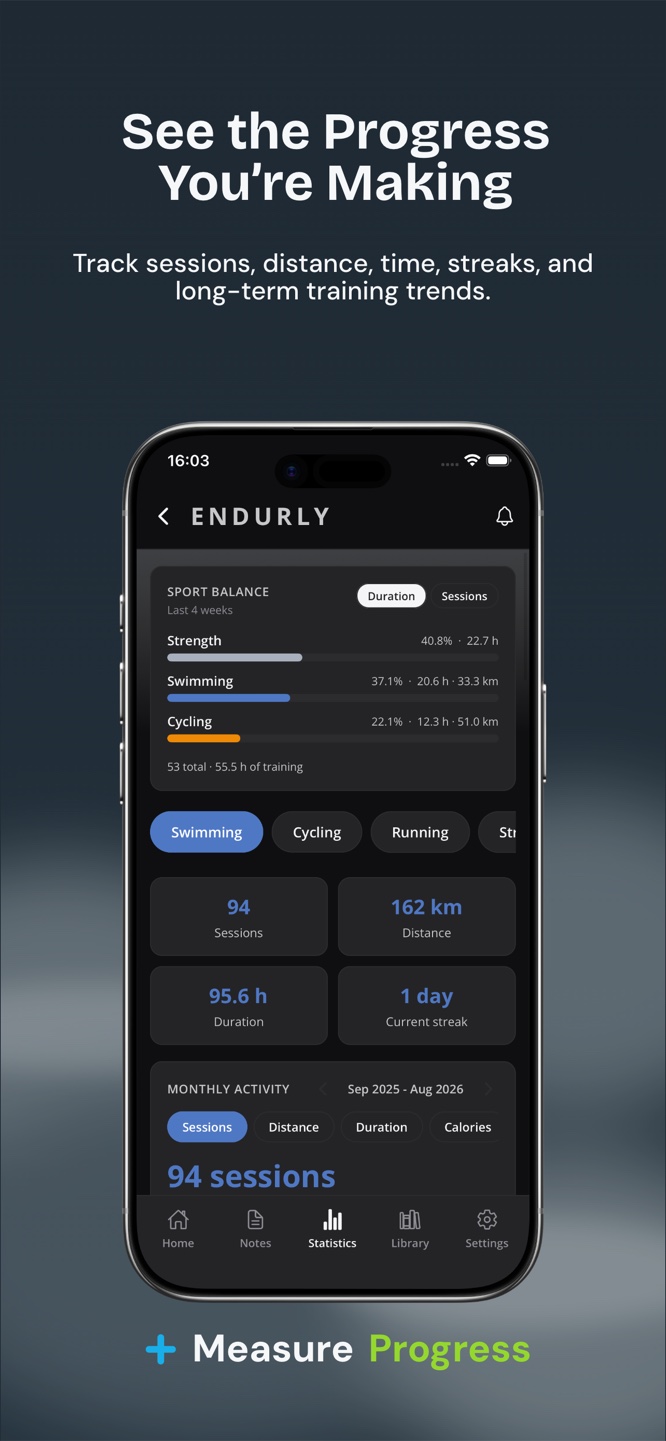
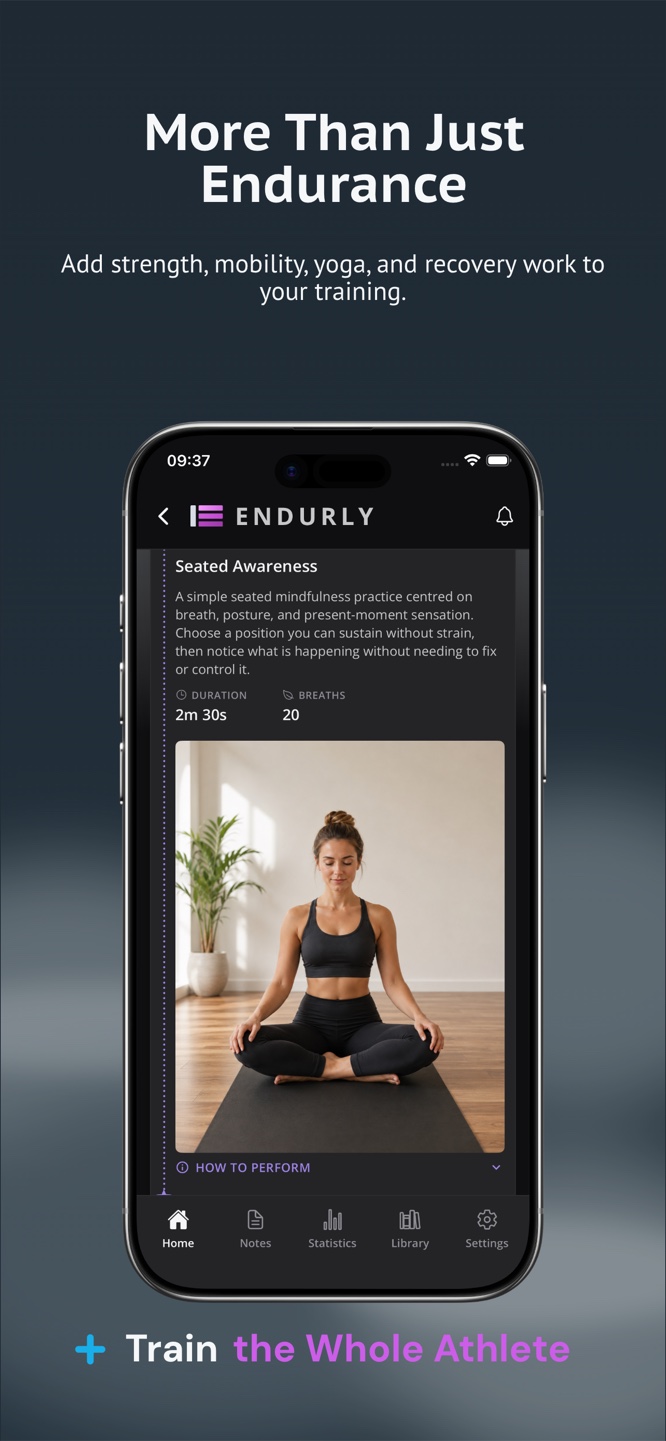
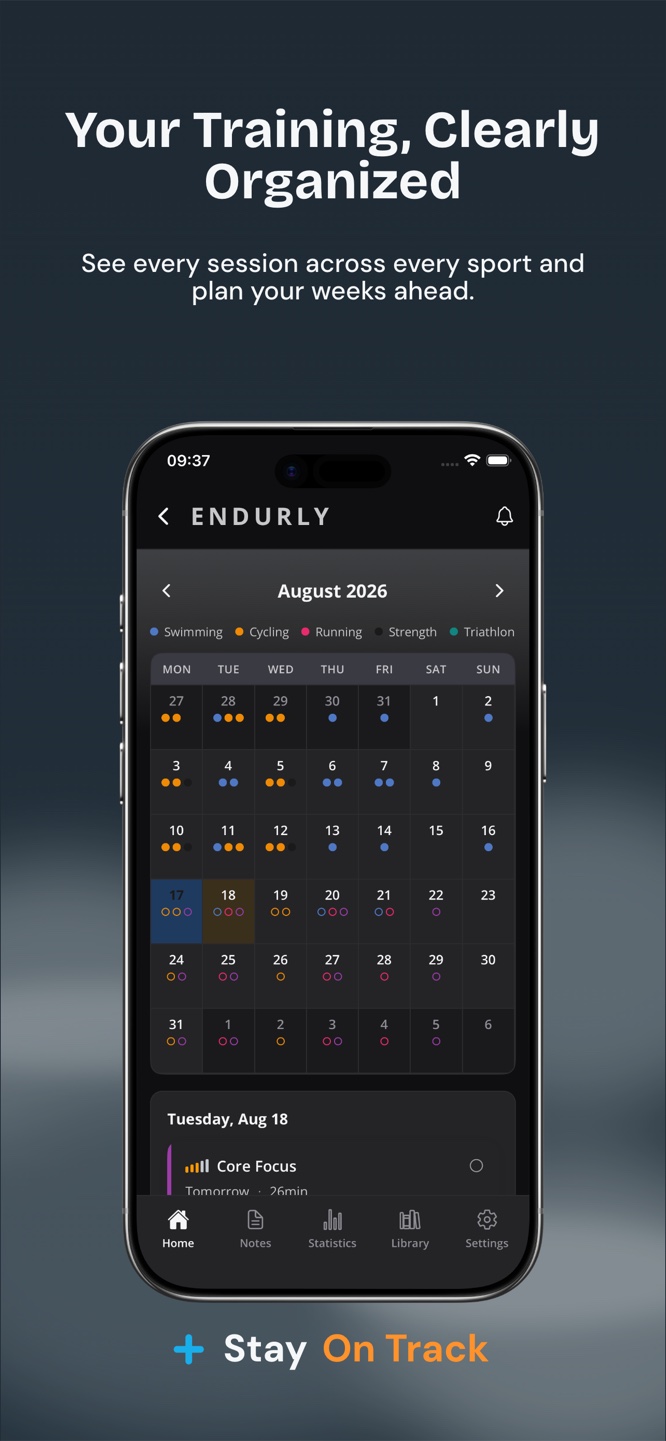
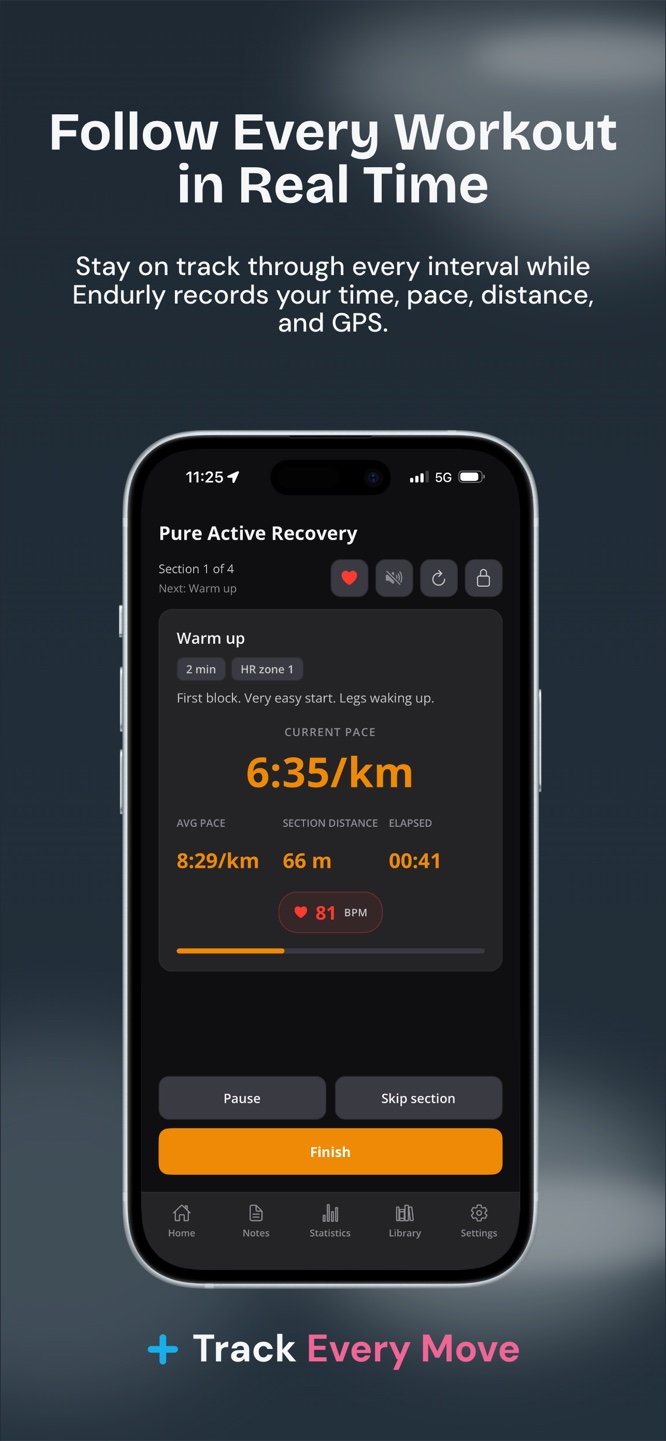
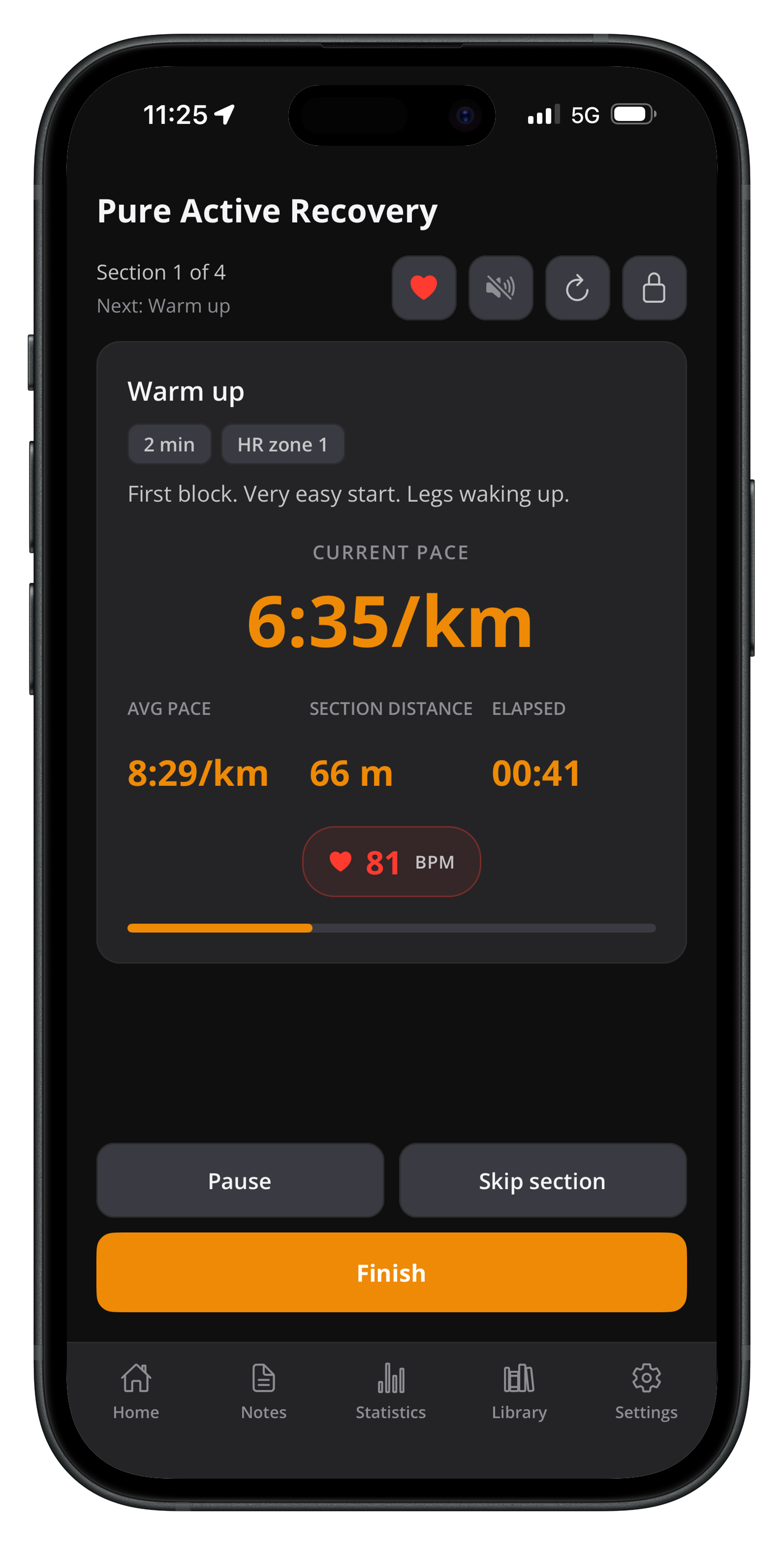
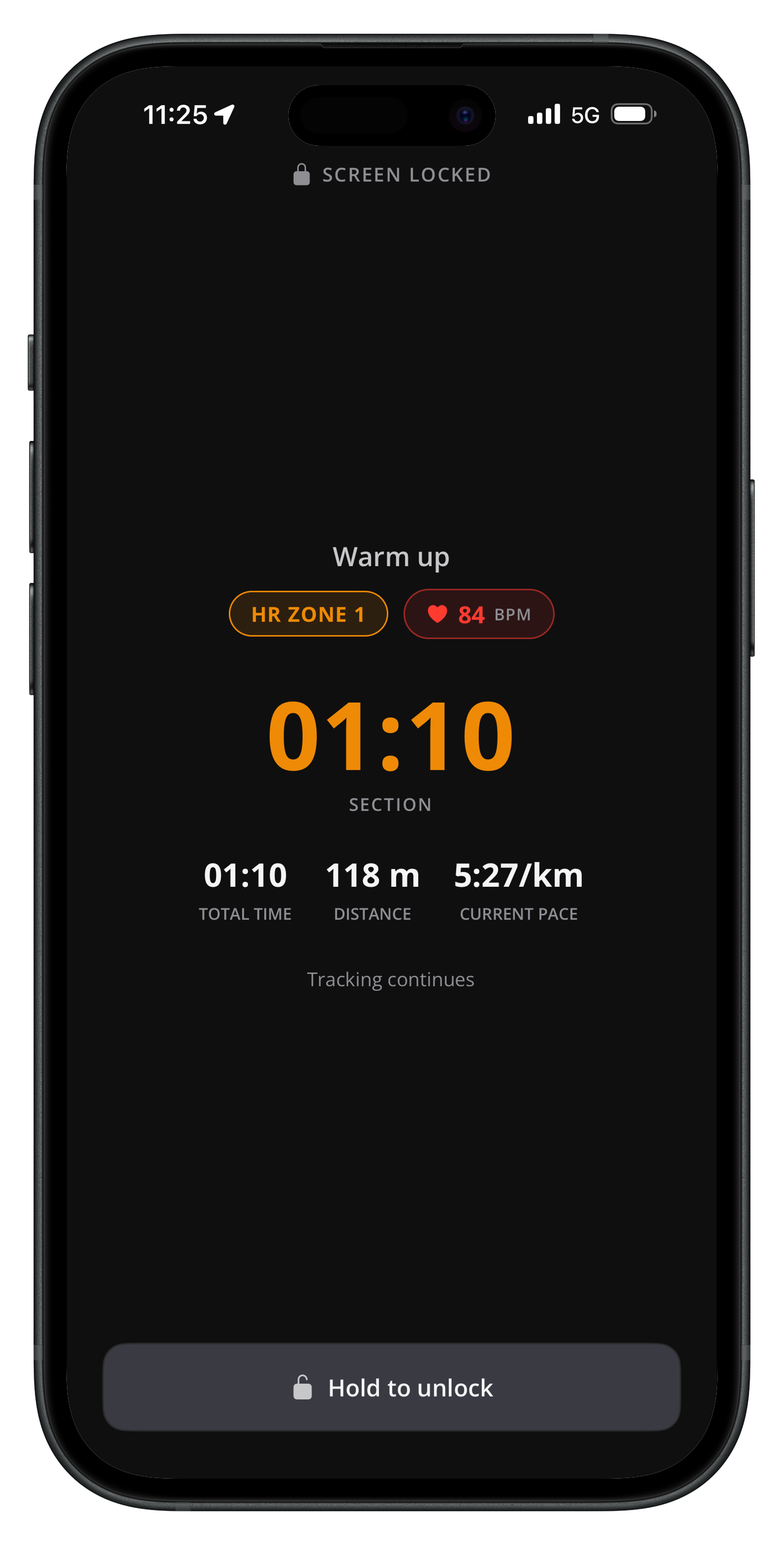
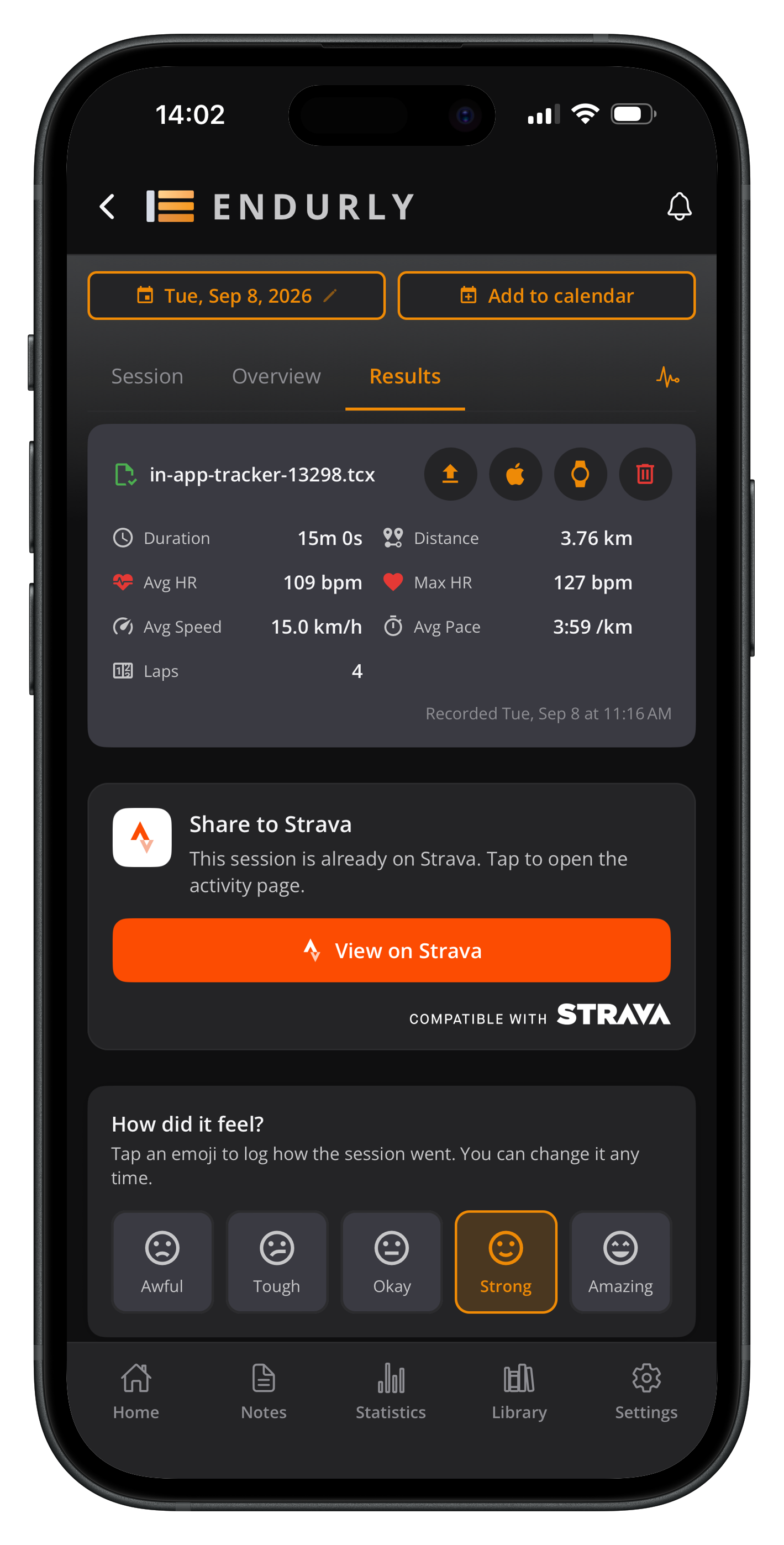
In the tracker
How It Works
Choose your goal — base building, speed, race preparation — and set your current fitness level.
Select training days, target session duration, and surface preference. We fit the plan to your week.
Receive a complete multi-week plan with structured sessions, intensity targets, and progressive loading.
If you have ever followed a free 16-week marathon plan, you have already met the basic ideas of periodization: a long base phase, a build phase, a peak phase, and a taper. What those plans cannot do is adjust for what is actually happening in your week. Endurly's running generator builds a multi-week training block the same way a coach would — it picks a primary focus for each week, scales volume progressively, schedules a recovery week roughly every fourth slot, and chooses session intent (easy, tempo, intervals, long run, recovery) based on where you are in the block. The difference is that the plan also fits your real-life schedule: how many days you can train, how long each session can be, what surface you have access to, and what your current pace anchor actually is. Sessions that don't fit the envelope don't get generated, instead of being prescribed and quietly skipped.
The progression itself is conservative on purpose. Most injuries in recreational runners come from sudden volume jumps, not from aggressive intensity, so each week's running volume rises by a small percentage before the deload week resets the load. Inside each week the intent rotates: an easy day pairs with a long run, a tempo day pairs with an interval day, and recovery work bookends the harder material. You see the next two weeks at a glance on the dashboard and the full block on the plan page, but you only need to look at today. The session card tells you what to do, why, and at what effort, and after you finish it the analytics page records the actual session against the planned one so the next block calibrates against real data, not assumptions.
The single most useful number for running training is your lactate threshold pace — the pace you could hold for roughly an hour at race effort. It is the pivot around which every other zone is built: easy runs are noticeably slower, tempo runs sit just below it, intervals work just above it, and recovery sits well below. Endurly anchors your zones to either a measured threshold pace from a recent test or to a heuristic estimate based on your training profile. From there every HR zone has a corresponding pace target, and the session card shows both: the heart-rate target if you wear a strap, and the pace target if you read off your watch. You don't have to choose; the system uses whichever is more reliable for the kind of session you are running.
Threshold pace also drifts as you train, so the calibration is not a one-time event. After a productive block you should expect your threshold pace to come down by a few seconds per kilometre, which means the easy and tempo paces shift along with it. Endurly prompts you to re-test every few months and updates your profile when you do; the next block is then built around the new anchor. For runners without access to a track or a clean measured route, the prompts also accept estimated paces from recent races or hard parkrun efforts. The point is that the pace ladder is real and personal — not a generic calculator output — and that the sessions actually challenge the right systems for your current fitness.
If your only hard sessions are 4-by-1 km tempo repeats, you are training one part of the engine very well and the rest barely at all. Endurly rotates interval shapes across the block so different physiological systems get loaded: VO2 work appears as 30-second to 3-minute intervals at hard effort, threshold work appears as longer sustained reps, fartlek work appears as unstructured surges inside an easy run, and hill repeats appear as short uphill efforts that build power without the joint impact of flat speed work. Tempo runs appear in two forms — sustained tempos for one block of the threshold zone, and progression runs that build through the tempo zone toward the end of the run. Each shape targets a slightly different mix of central cardiac and peripheral muscular adaptation, and rotating through them is what keeps the curve climbing instead of plateauing.
The variety also matters for psychology. Five weeks of identical Tuesday tempo runs is the fastest way to lose motivation, even when the sessions are technically working. The session-name resolver in Endurly chooses a name for each session based on the dayfocus and the week's theme, so today's session might be 'Sharpen negative splits' or 'Develop fast finish' or 'Reinforce aerobic base', not just 'Tempo run #14'. The names are functional, not marketing — they tell you what the workout is asking of you — but they also signal that today's session is not yesterday's. Combined with the actual structural rotation, this keeps both the body and the head engaged across the long arc of a 12 to 16-week block.
The most underrated skill in self-coached running is knowing when to back off. The plan you start with is rarely the plan you finish with, because life intervenes — a stressful week at work, a missed night of sleep, a niggle that becomes a strain if you push it. Endurly's session card always includes a deliberately easy fallback option: if today is supposed to be 8x800m at threshold and you woke up flat, you can swap the session for a 40-minute easy run without abandoning the block. The skipped intensity work is absorbed into the next deload, the volume target for the week adjusts, and your training history reflects what you actually did, not just what was planned. That honesty matters for the next block's calibration.
Recovery weeks are also real and not cosmetic. The deload week in the Balanced General template drops volume by a third and removes the highest-intensity session, replacing it with a shorter tempo. The point is to let the adaptations from the previous three weeks consolidate — fitness improvements happen during recovery, not during training itself. Most self-coached runners under-recover and over-train, then wonder why progress stalls in week six. Endurly's recovery weeks are non-negotiable inside the block, but you can stretch them or skip a hard session when you need to. The training plan is a guide, not a contract; the analytics page captures what really happened so the next block makes a better guess. Across a year of training, that loop compounds into the kind of progress people pay coaches for.
Training Insights
Hard training feels productive. But it's not always effective. Progress comes from stress, recovery, and repeat. If you skip recovery, you skip improvement. Easy days are part of the plan — not a weakness.
Intervals stop working when they become random. No structure means no progress. You need clear pace, clear recovery, and clear purpose. If every session feels different for no reason — it's noise, not training.

Most training happens in the middle. Not easy enough to recover, not hard enough to improve. That's the danger zone. Easy days should be easy. Hard days should be purposeful. Avoid the grey zone.
Feeling stuck usually means something is off balance. Too much intensity or not enough structure. Progress needs consistency, recovery, and clear sessions — not just more effort.
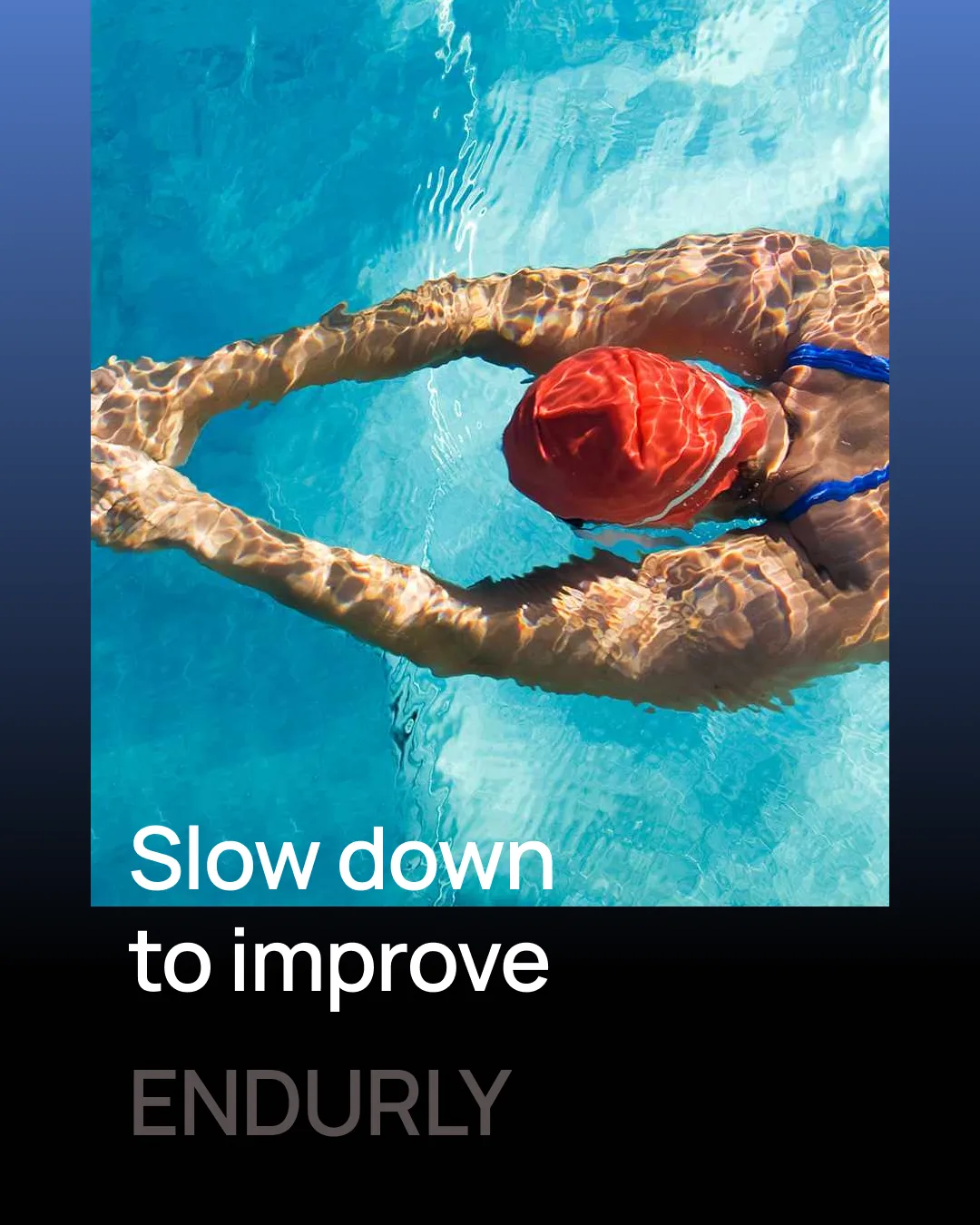
This is the most common mistake. If you can't talk easily, it's not an easy run. Slowing down feels wrong at first. But it builds the base. Run slower. Get faster.
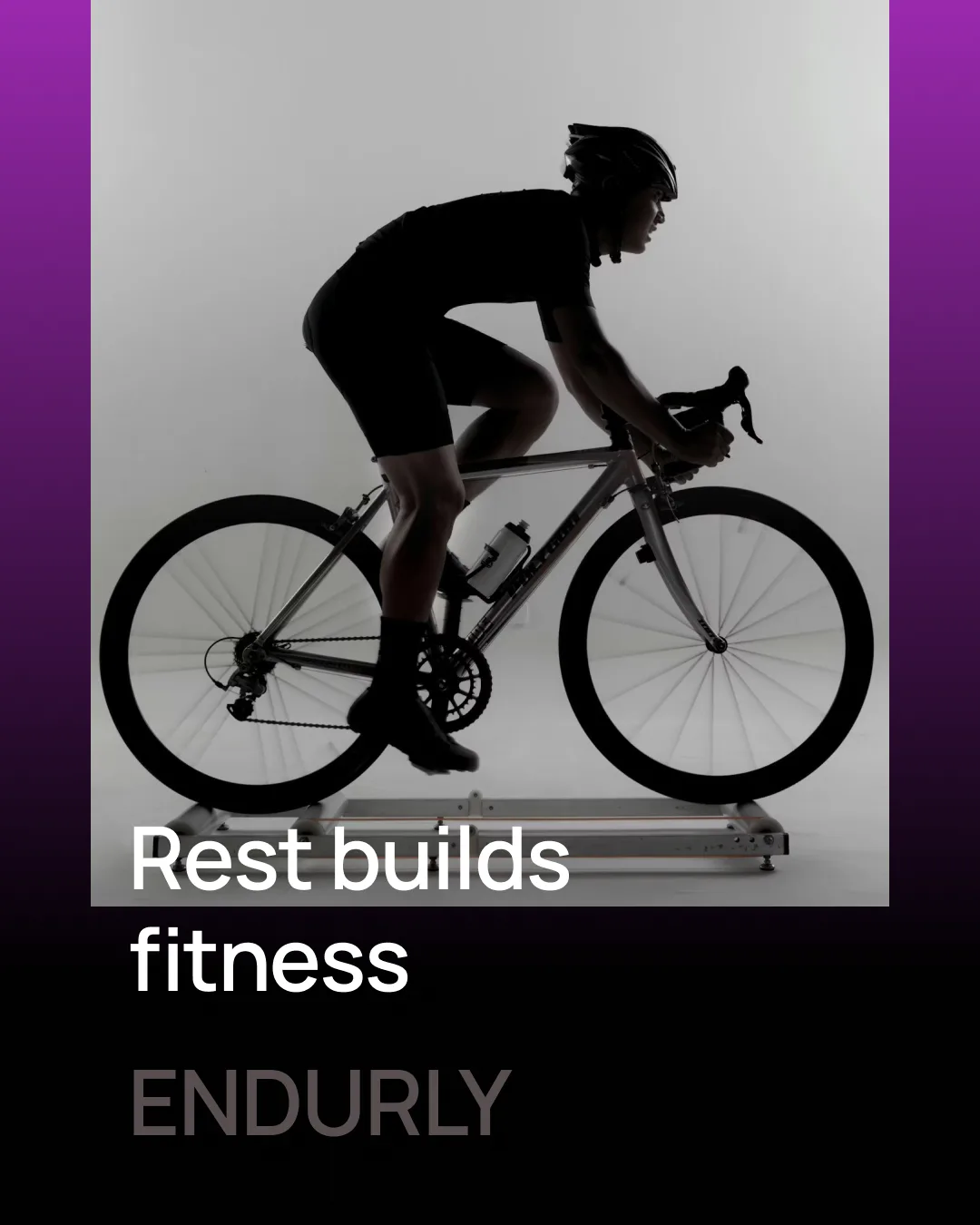
Rest is not doing nothing. It's part of the process. Training breaks you down. Recovery builds you up. Without rest, there is no adaptation. Rest days move you forward.

Motivation comes and goes. Consistency stays. You don't need perfect sessions — you need regular ones. Small sessions done often beat rare perfect workouts. Show up. Repeat.
Yes. Endurly is free to sign up and generate workouts. Optional premium features are clearly marked in the app.
Yes. Pick the beginner training level and Endurly scales every workout to a safe, foundational load with clear coaching cues.
Yes. Endurly exports to Garmin, Suunto, and Wahoo via native integrations and structured .FIT files.
No. Endurly generates a workout without personal zones and progressively personalises as you record sessions.
Create your free account and generate your first running plan in under a minute.
Start Running Free