
You Don't Need to Train Hard Every Day
Hard training feels productive. But it's not always effective. Progress comes from stress, recovery, and repeat. If you skip recovery, you skip improvement. Easy days are part of the plan — not a weakness.
Balance swim, bike, and run with brick sessions and race-focus periodization. Set your race distance and weekly budget — get a complete multi-week plan.
Generate a Free Triathlon Plan No credit card required. Free to get started.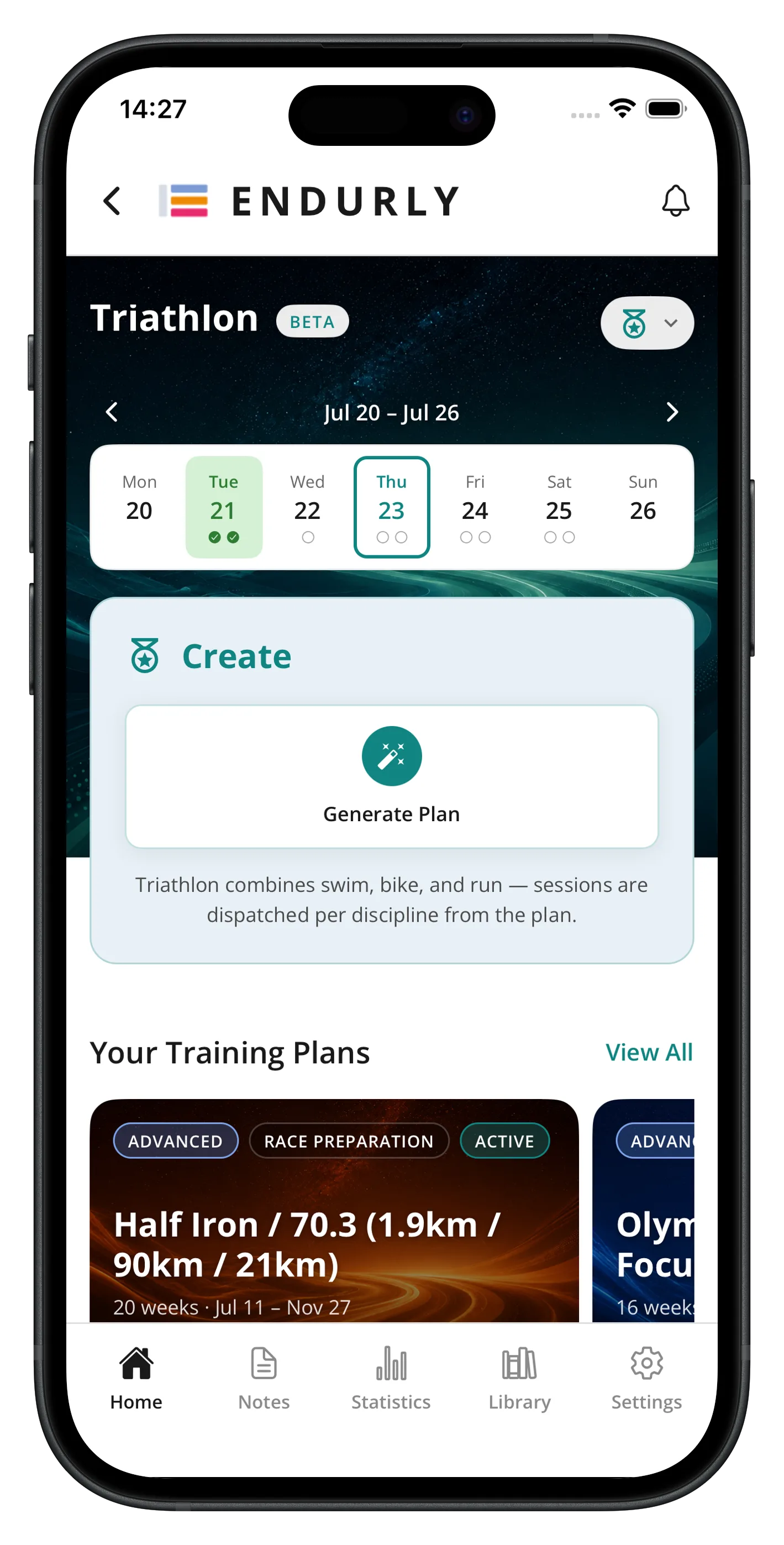
Features
Swim, bike, and run sessions are distributed across the week so no discipline is neglected and fatigue is managed across the whole training load.
Sprint, Olympic, half-iron, and full-iron race distances. Each preset shapes the volume split, intensity distribution, and taper length differently.
Bike-to-run bricks are scheduled at the right cadence — close enough to race day to build transition legs without overloading recovery.
The final weeks reduce volume while maintaining intensity so you arrive at the start line rested, sharp, and ready to race.
App Screenshots
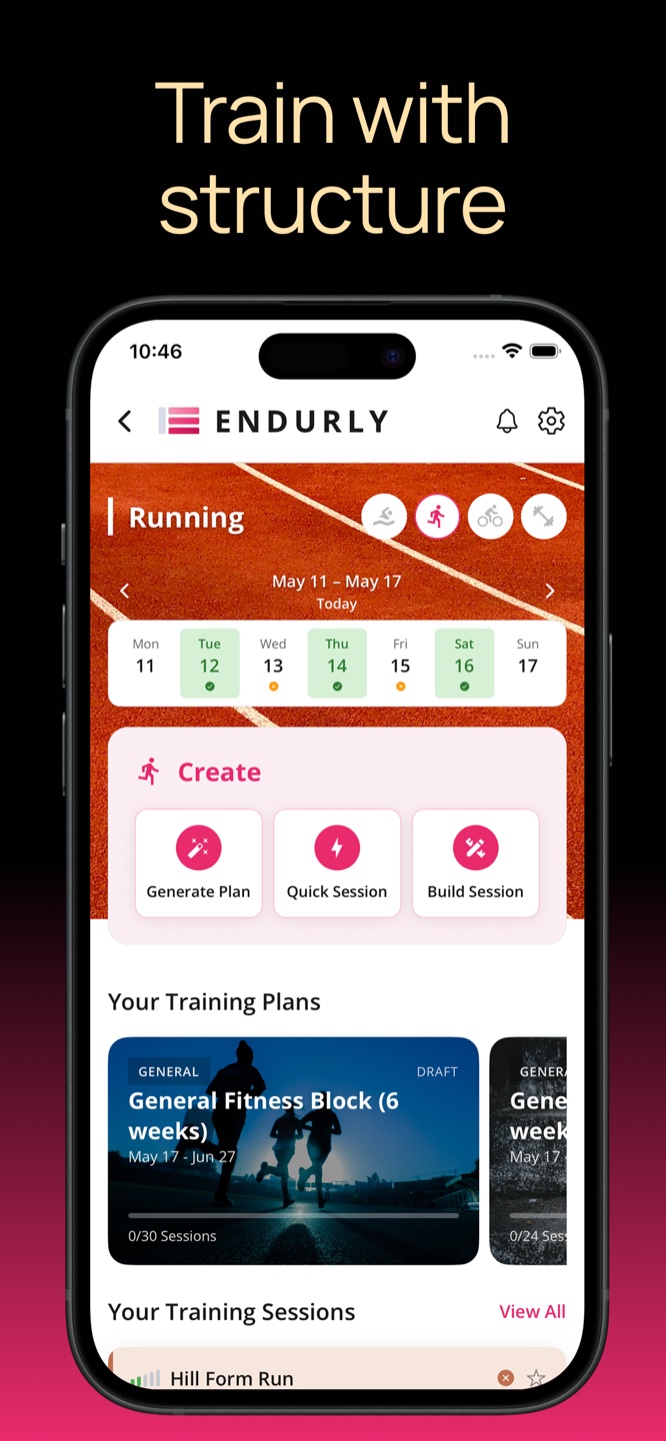
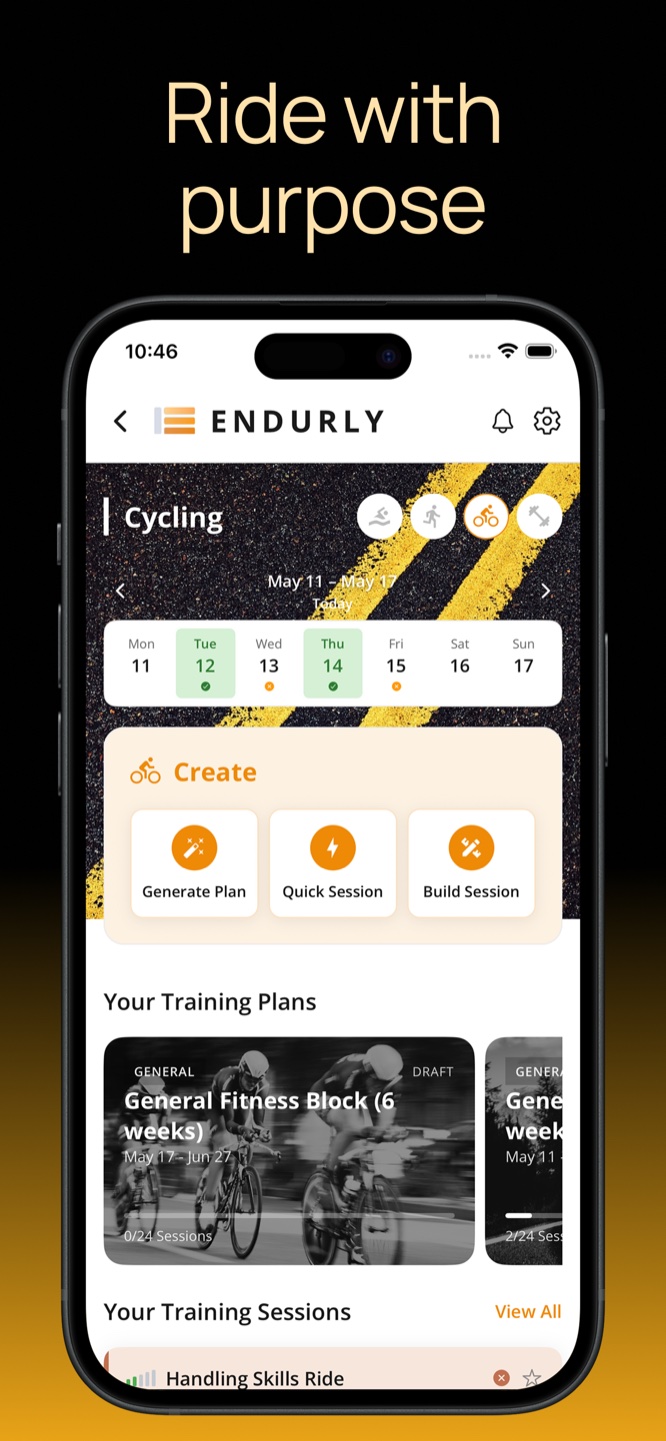
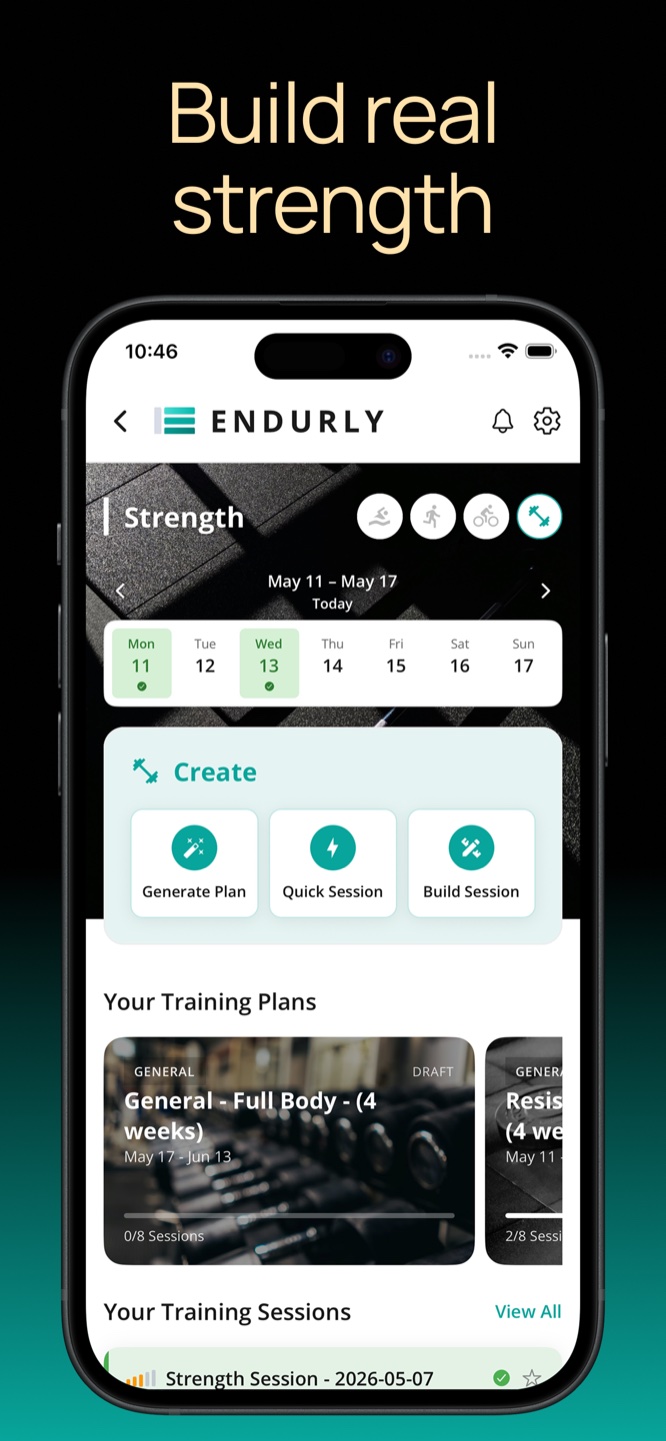
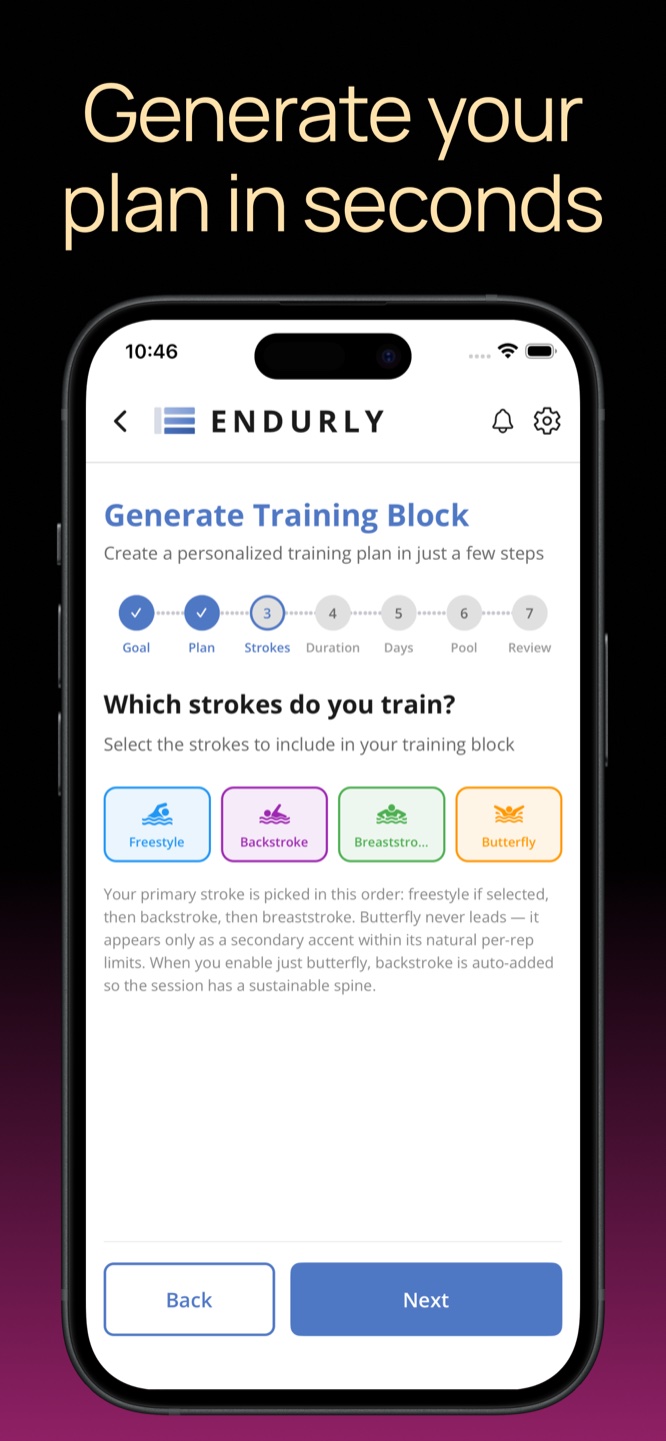
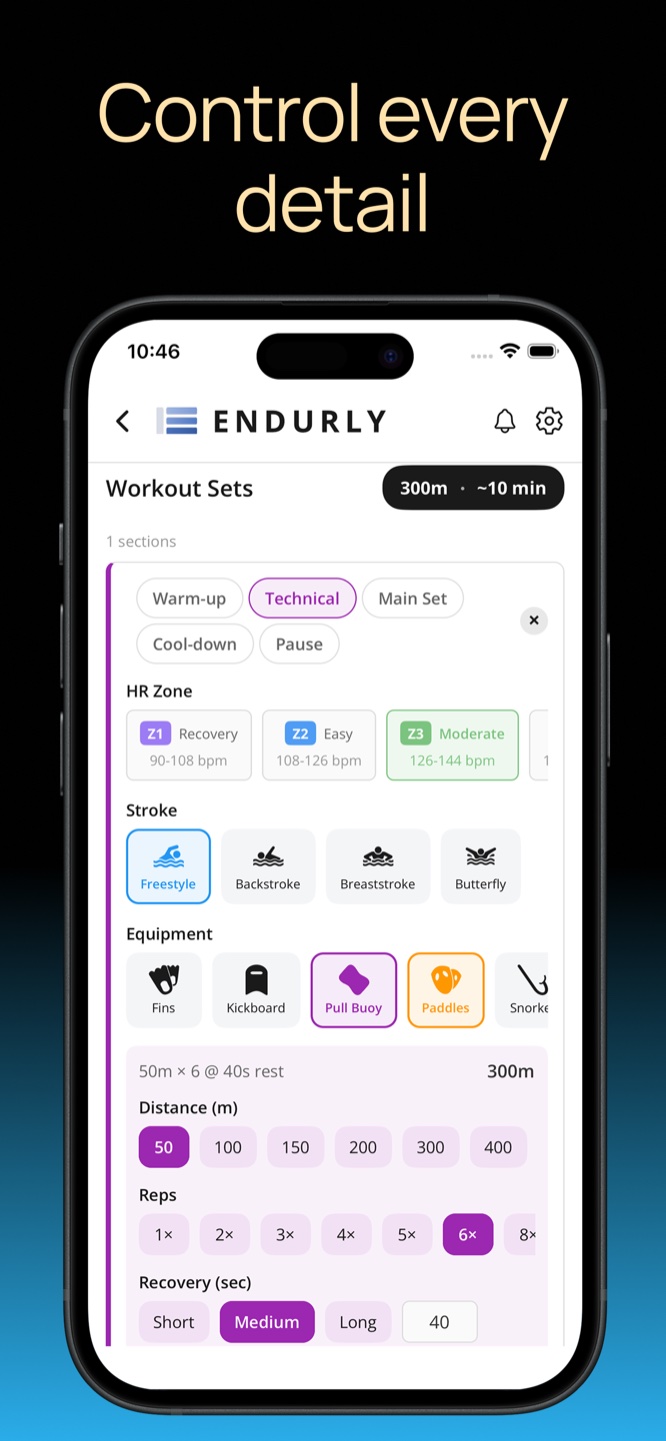
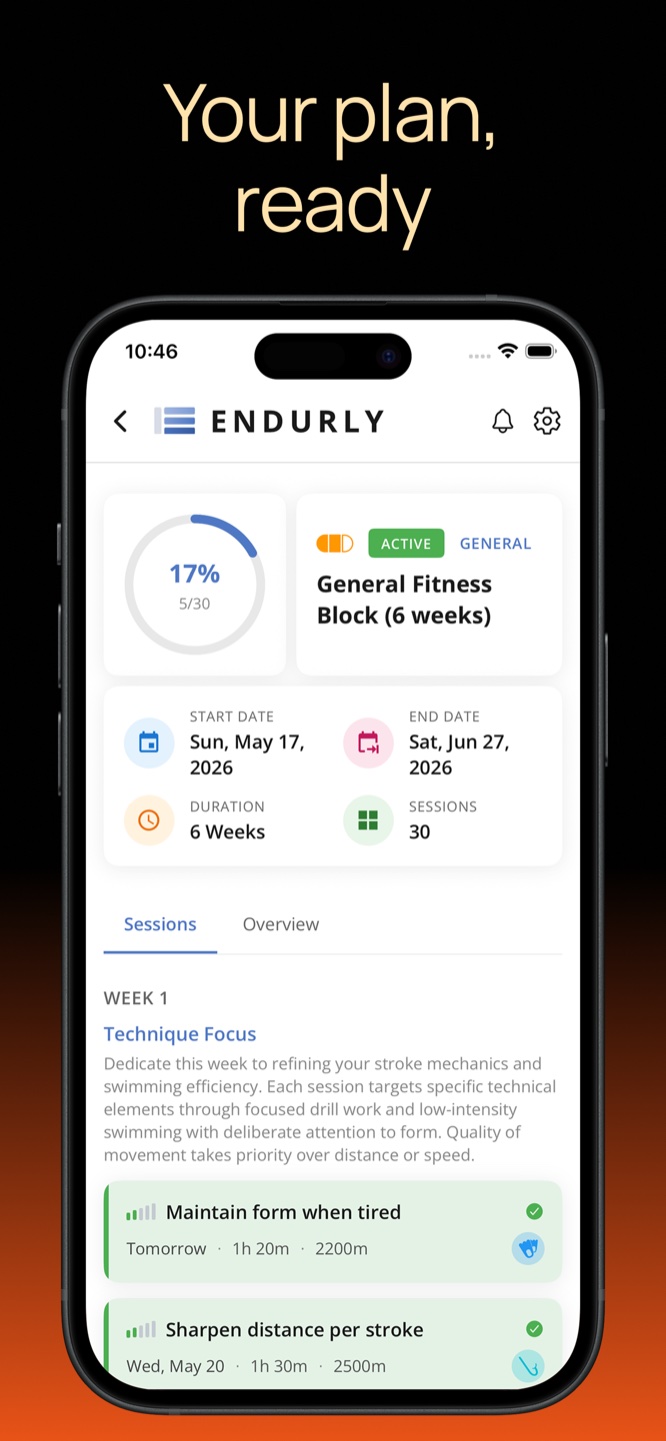
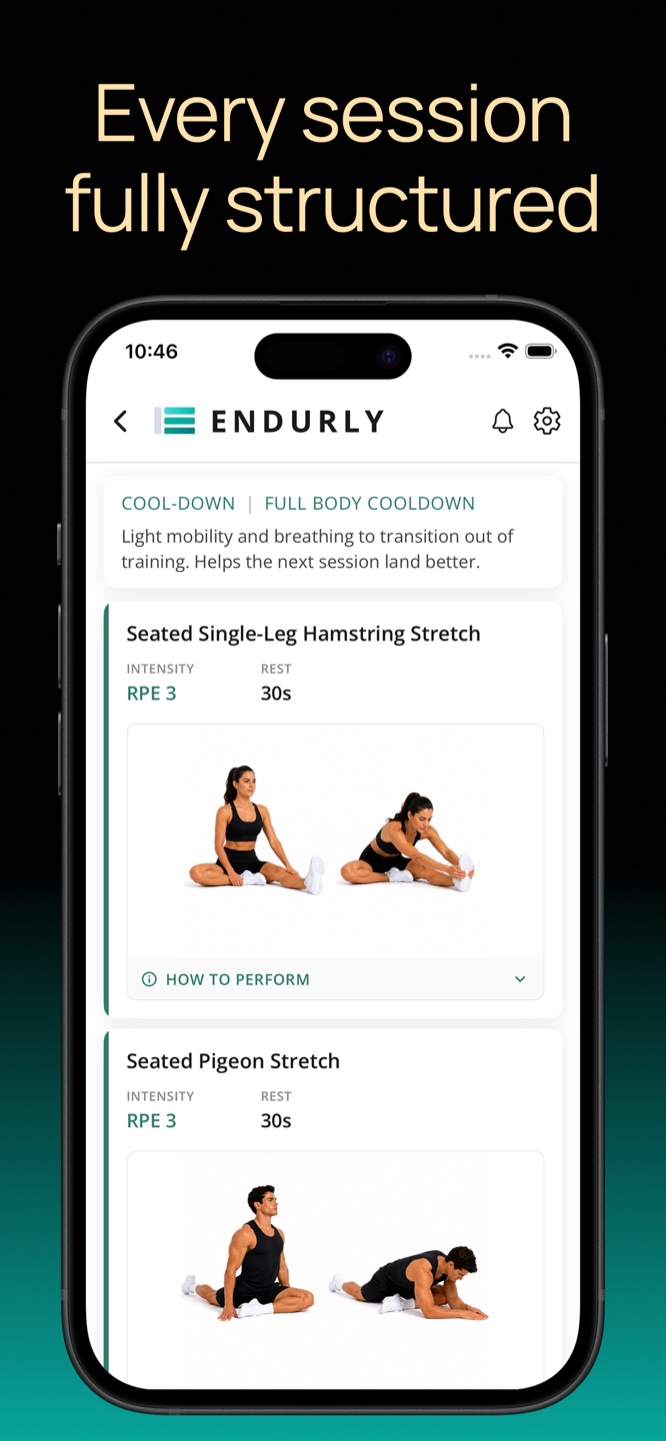
How It Works
Choose sprint, Olympic, half-iron, or full-iron. Your target distance shapes the entire block structure, volume split, and taper.
Tell us how many hours per week you can train and which days are available. The plan fits your life, not the other way around.
Receive a complete periodized block with structured swim, bike, and run sessions, brick workouts, and a race-prep taper — ready to start today.
The central challenge of triathlon training is not fitness — it is balance. An athlete who trains hard in one discipline while neglecting the others will arrive at the race over-prepared for one leg and under-prepared for two. A strong cyclist who has not swum enough will lose minutes in the water and arrive at T1 already behind their plan. A strong runner who has skimped on bike volume will over-reach on the bike, burn more glycogen than they planned, and then discover that the run feels nothing like it does in isolation. Endurly's triathlon generator solves this by distributing sessions across all three disciplines from the first week and adjusting the split based on your declared race distance and relative strengths.
The session distribution is not simply one-third each. Race-distance presets shape the split: a sprint-distance block weights bike and run more evenly and keeps swim volume moderate; a half-iron block extends the long ride and long run considerably and treats the swim as the discipline to maintain rather than develop. Within each discipline, the session types vary — easy aerobic, threshold, technique — so the body is not just accumulating fatigue in one energy system. The split is also re-weighted as the block progresses: early weeks establish aerobic base across all three, middle weeks layer in race-specific intensity, final weeks reduce volume and sharpen race pace.
A brick session is any workout that combines two triathlon disciplines back to back — most commonly a bike ride followed immediately by a run. The name refers to the way the legs feel for the first few minutes of the run: heavy, uncooperative, brick-like. This is a genuine physiological phenomenon. The muscle recruitment pattern for cycling is different from running, and the transition requires the neuromuscular system to shift gears while the cardiovascular system is already working hard. Athletes who never practise this transition will face it for the first time on race day, which is the worst possible context for discovering how long it takes their legs to adapt.
Endurly schedules brick sessions at the right point in the training block. Early bricks are short — a moderate ride followed by fifteen to twenty minutes of easy running — designed to teach the legs the transition without adding meaningful fatigue. Mid-block bricks extend the run and begin to include race-effort sections on the bike so the experience more closely approximates race conditions. Late bricks in the taper phase are shorter but at race-specific effort, leaving the athlete familiar with the transition sensation without creating fatigue that would compromise race-day performance. The swim-to-bike transition is not typically trained in brick format for most athletes, but the generator notes key elements of T1 preparation in session cues.
Triathlon training follows the same periodization logic as any endurance sport — base, build, peak, taper — but applies it across three disciplines simultaneously. Endurly structures each week with a clear weekly focus that aligns all three sports: a base-building week features long easy sessions in all three disciplines; a threshold week introduces sustained race-effort intervals on the bike and run and a structured main set in the pool; a recovery week drops volume by thirty to forty percent to allow adaptation. The block progresses through these phases, and the volume peak sits two to three weeks before the event, allowing enough time for the taper to restore freshness without losing fitness.
The challenge unique to triathlon periodization is managing cumulative fatigue across three sports. A hard bike interval session on Wednesday and a hard run interval session on Thursday is a pattern that most recreational athletes cannot absorb consistently — the combined load is too high. Endurly's scheduler avoids placing high-intensity sessions in adjacent disciplines on consecutive days. Hard bike work is followed by an easy swim or rest. A threshold run is separated from the next hard bike by at least one easy session. This sequencing is not conservative timidity; it is the difference between a training block that builds fitness and one that builds fatigue.
The taper is the most misunderstood phase of triathlon preparation. Many athletes — especially first-timers — interpret the reduction in training volume as a loss of fitness and respond by adding extra sessions, longer rides, or anxious pre-race runs. This is the opposite of what the body needs. Fitness is built in the weeks before taper; the taper's purpose is to let the acute fatigue accumulated during those weeks dissipate while leaving the underlying aerobic adaptations in place. Endurly's taper structure reduces volume by fifty to sixty percent in the final ten to fourteen days while maintaining workout intensity. The result is an athlete who arrives rested, with their cardiovascular capacity intact and their muscles fresh enough to deliver it.
Race-week sessions in the Endurly plan are short, sharp, and specific. A twenty-minute open-water swim to rehearse sighting. A forty-minute easy ride with three or four thirty-second accelerations to race-start effort. A twenty-minute jog with two or three short pick-ups at race run pace. These sessions are not training; they are race activation. They remind the body of the specific demands about to be placed on it without adding any new stress. The race plan — nutrition, pacing targets, transition order, equipment check — is also surfaced in the final week coaching notes so that race morning is a sequence of familiar decisions rather than a series of improvised ones.
Training Insights
Hard training feels productive. But it's not always effective. Progress comes from stress, recovery, and repeat. If you skip recovery, you skip improvement. Easy days are part of the plan — not a weakness.
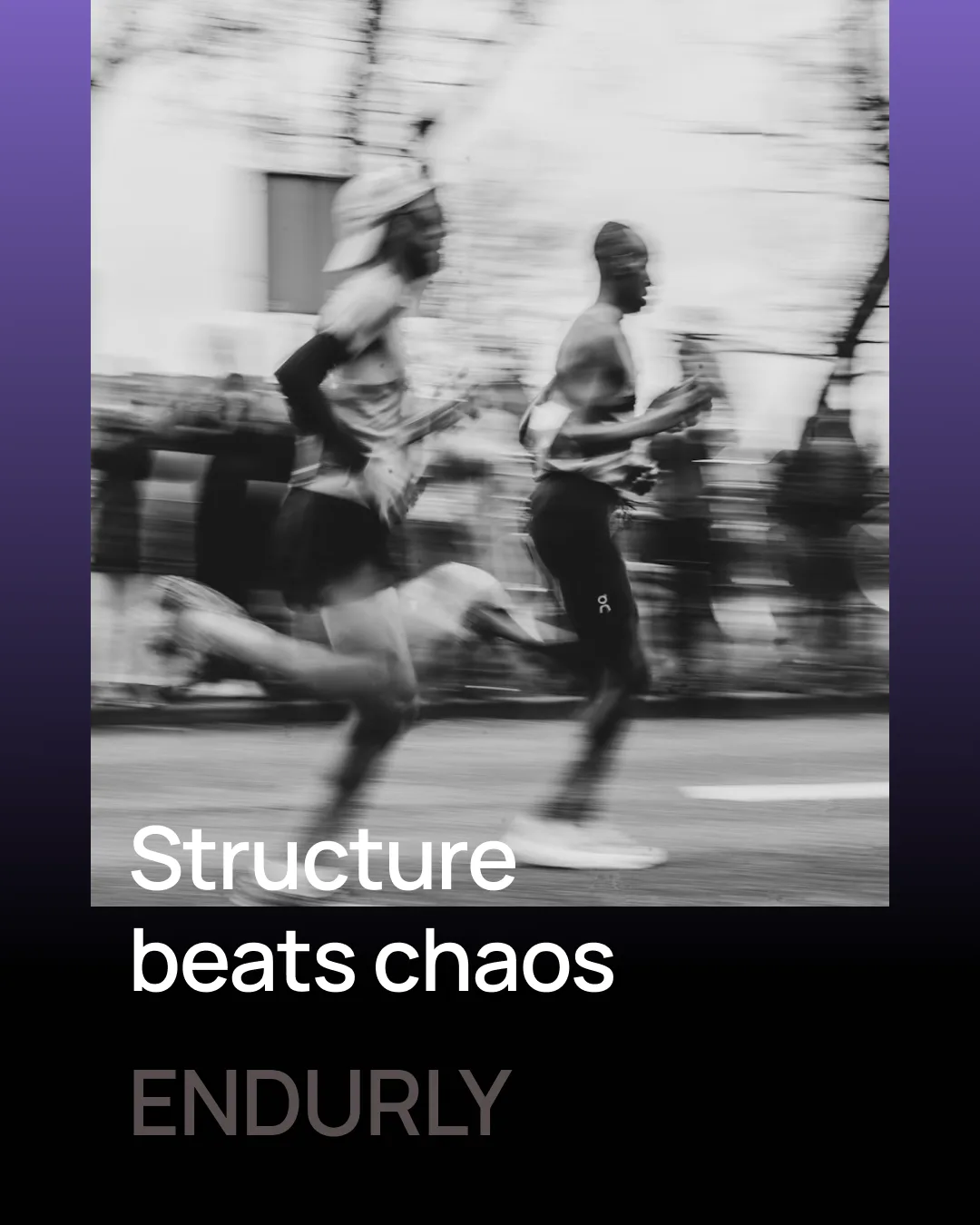
Intervals stop working when they become random. No structure means no progress. You need clear pace, clear recovery, and clear purpose. If every session feels different for no reason — it's noise, not training.

Most training happens in the middle. Not easy enough to recover, not hard enough to improve. That's the danger zone. Easy days should be easy. Hard days should be purposeful. Avoid the grey zone.
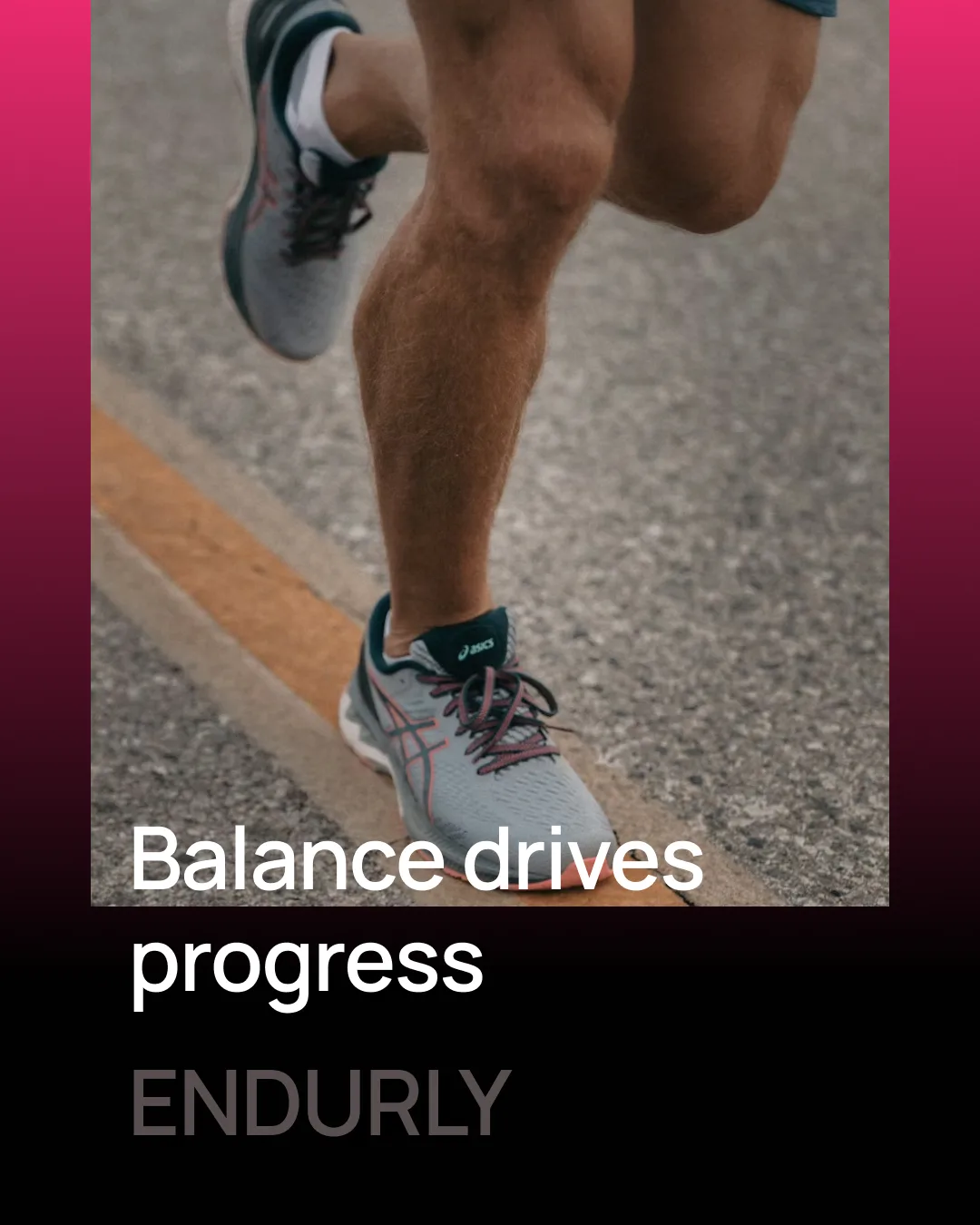
Feeling stuck usually means something is off balance. Too much intensity or not enough structure. Progress needs consistency, recovery, and clear sessions — not just more effort.
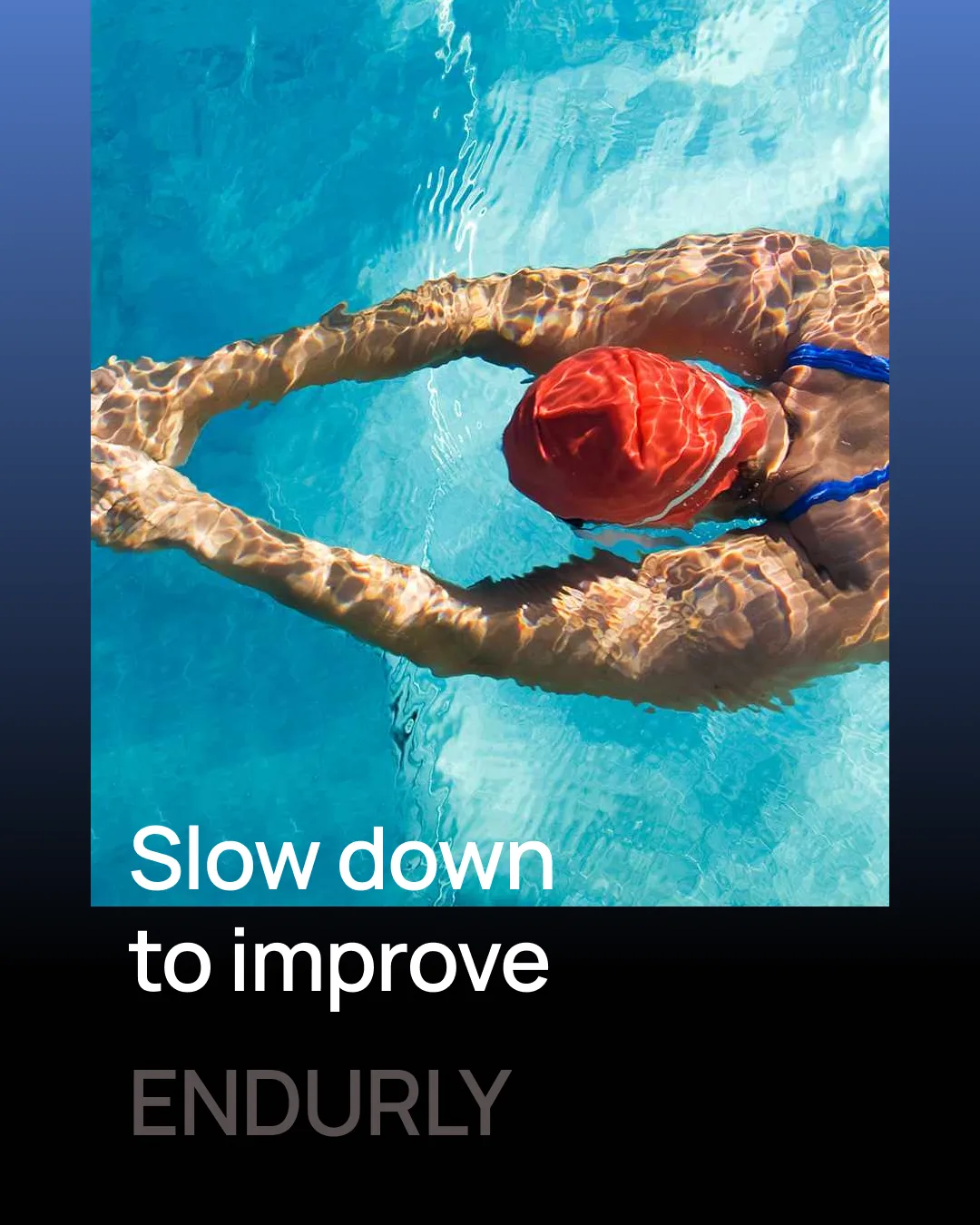
This is the most common mistake. If you can't talk easily, it's not an easy run. Slowing down feels wrong at first. But it builds the base. Run slower. Get faster.
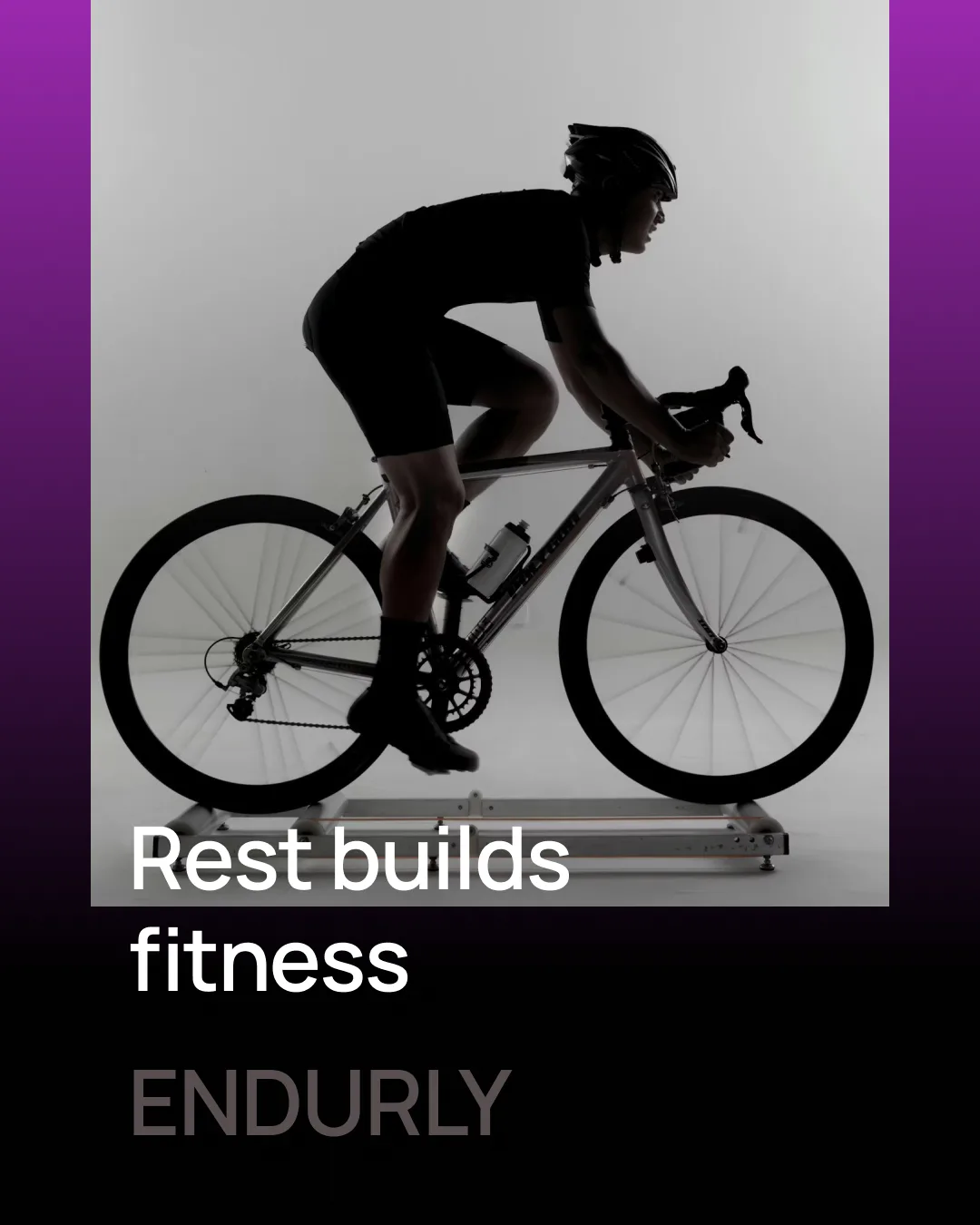
Rest is not doing nothing. It's part of the process. Training breaks you down. Recovery builds you up. Without rest, there is no adaptation. Rest days move you forward.

Motivation comes and goes. Consistency stays. You don't need perfect sessions — you need regular ones. Small sessions done often beat rare perfect workouts. Show up. Repeat.
Yes. Endurly is free to sign up and generate workouts. Optional premium features are clearly marked in the app.
Yes. Pick the beginner training level and Endurly scales every workout to a safe, foundational load with clear coaching cues.
Yes. Endurly exports to Garmin, Suunto, and Wahoo via native integrations and structured .FIT files.
No. Endurly generates a workout without personal zones and progressively personalises as you record sessions.
Create your free account and generate your first triathlon training block in under a minute.
Build Your Triathlon Plan Free