You Don't Need to Train Hard Every Day
Hard training feels productive. But it's not always effective. Progress comes from stress, recovery, and repeat. If you skip recovery, you skip improvement. Easy days are part of the plan — not a weakness.
Generate structured pool sessions with drills, stroke selection, and HR zone intervals. Choose your pool length, strokes, and goals — we build the rest.
Generate a Free Swimming Plan No credit card required. Free to get started.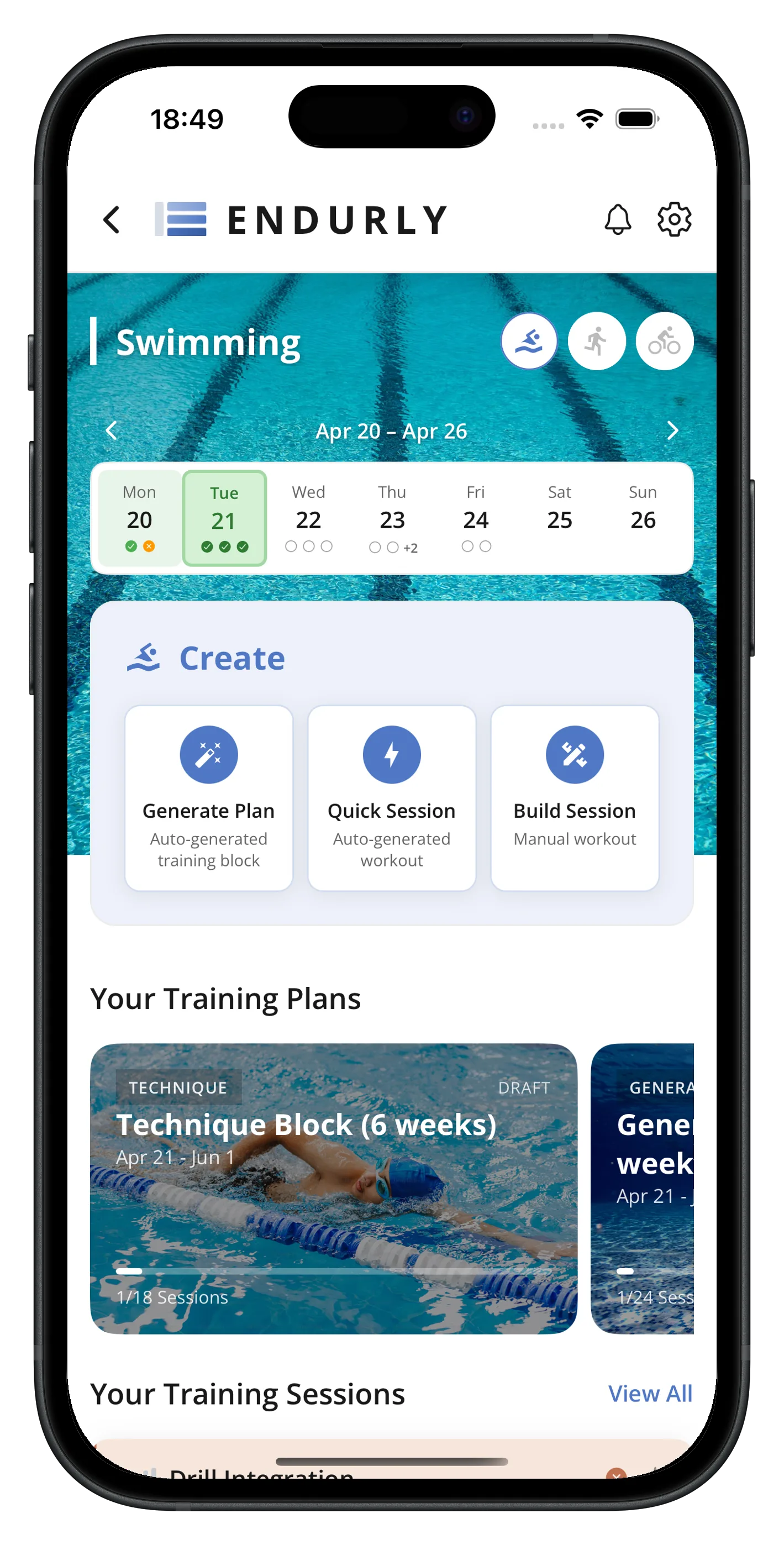
Features
Hundreds of swimming drills for technique work: catch-up, fingertip drag, fist drill, and more — organized by stroke and focus area.
Freestyle, backstroke, breaststroke, and butterfly. Build multi-stroke sessions or focus on a single style with progressive overload.
Configure sessions for pull buoy, fins, paddles, snorkel, and kickboard. Equipment varies across the block for training variety.
Set your pool length (25m or 50m) and distance range. All intervals are automatically rounded to fit your pool correctly.
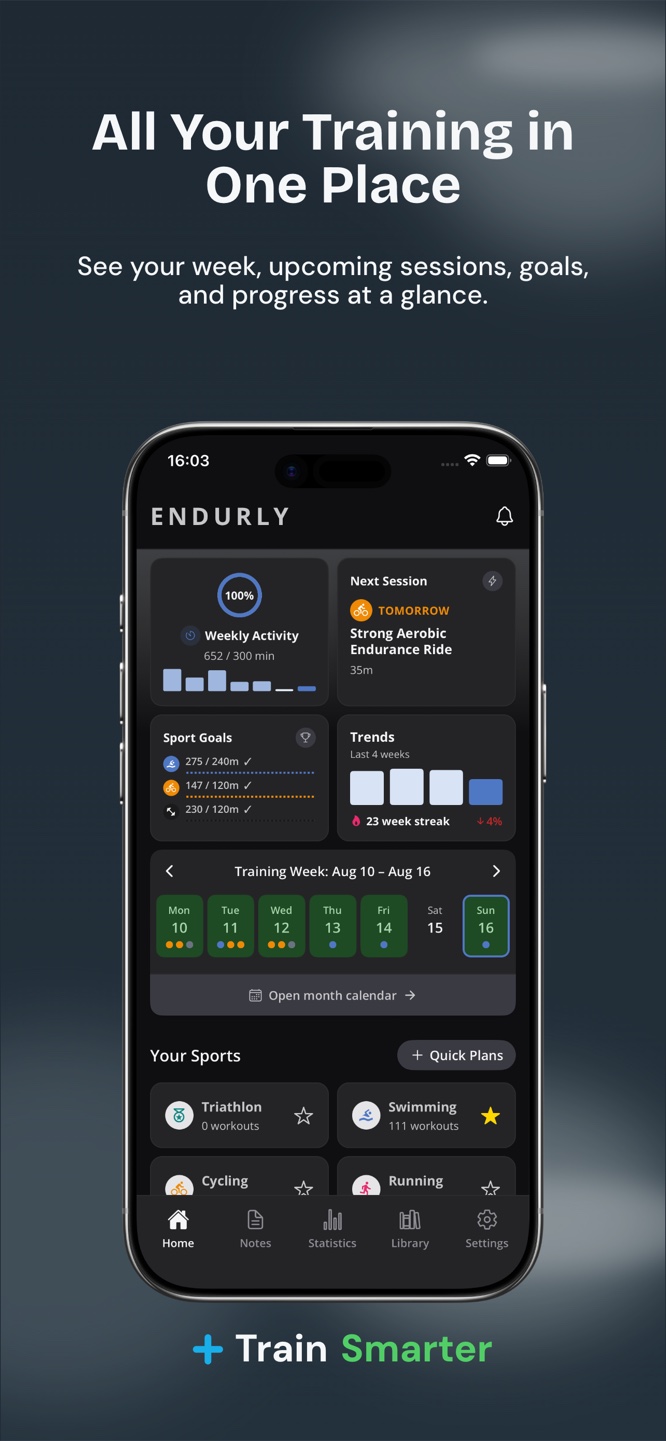
App Screenshots
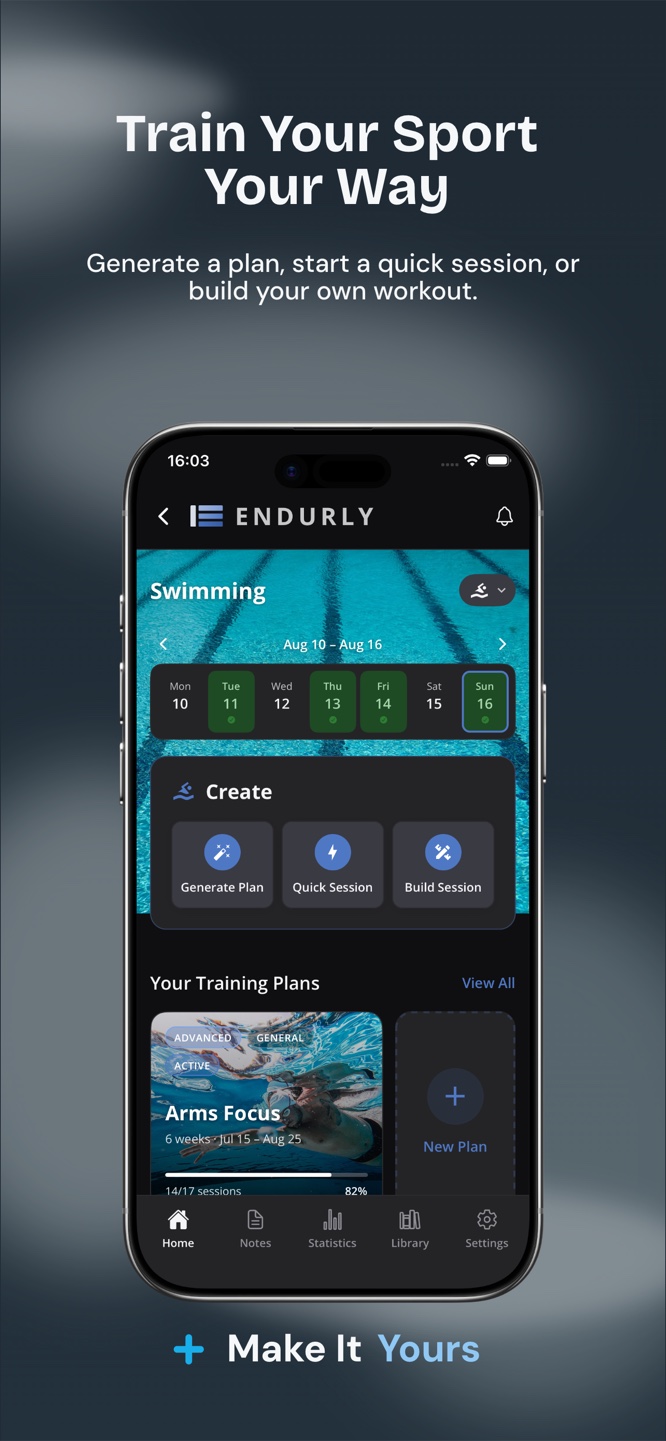
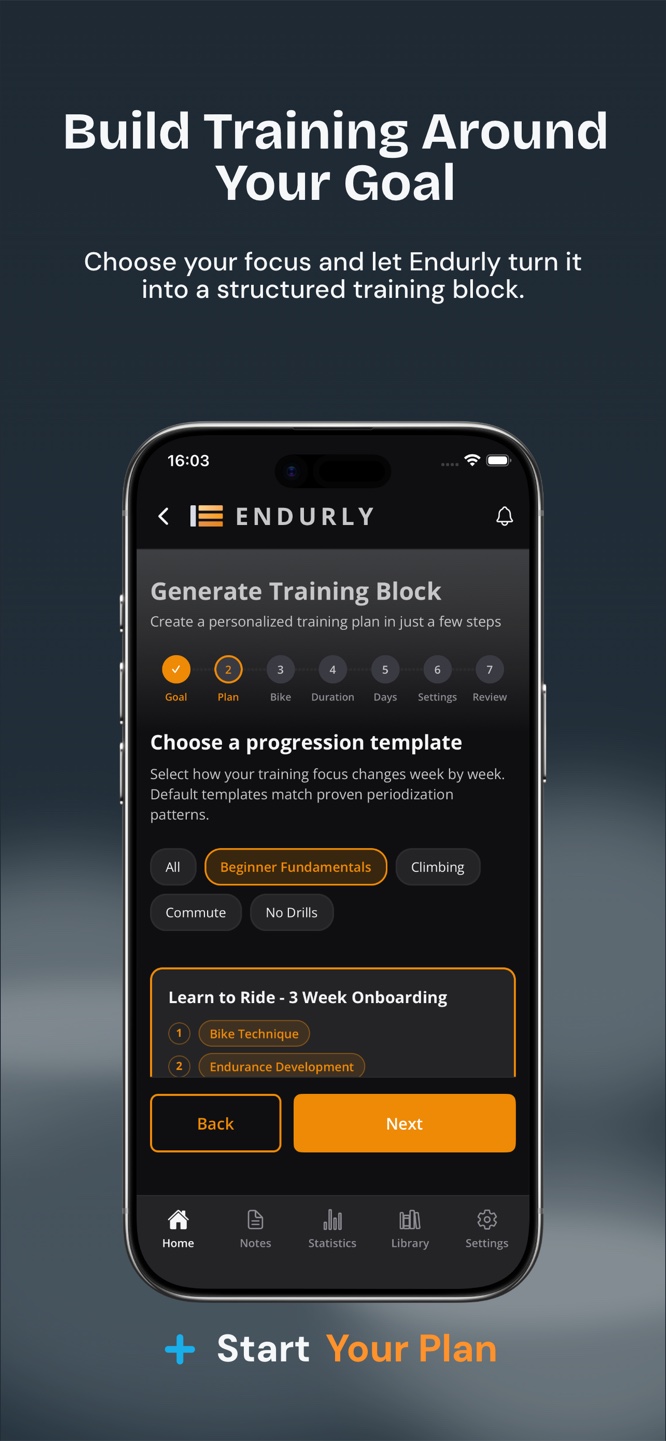
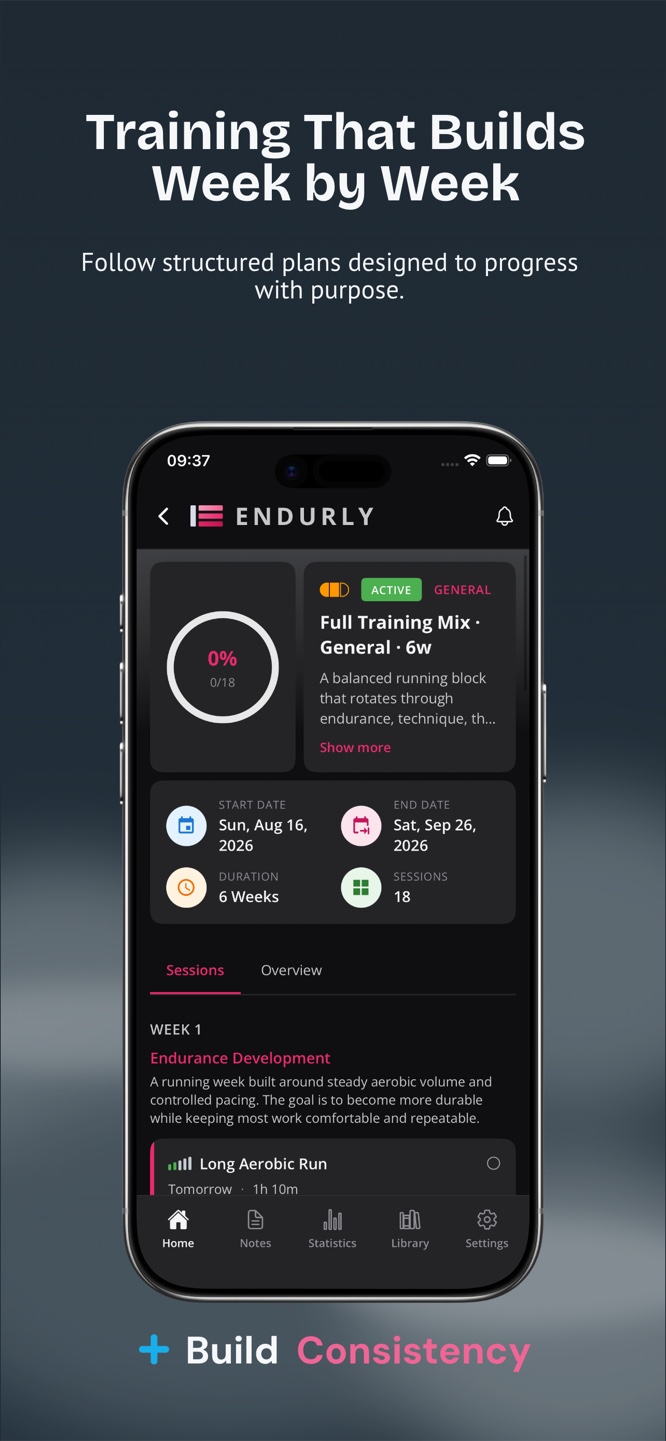
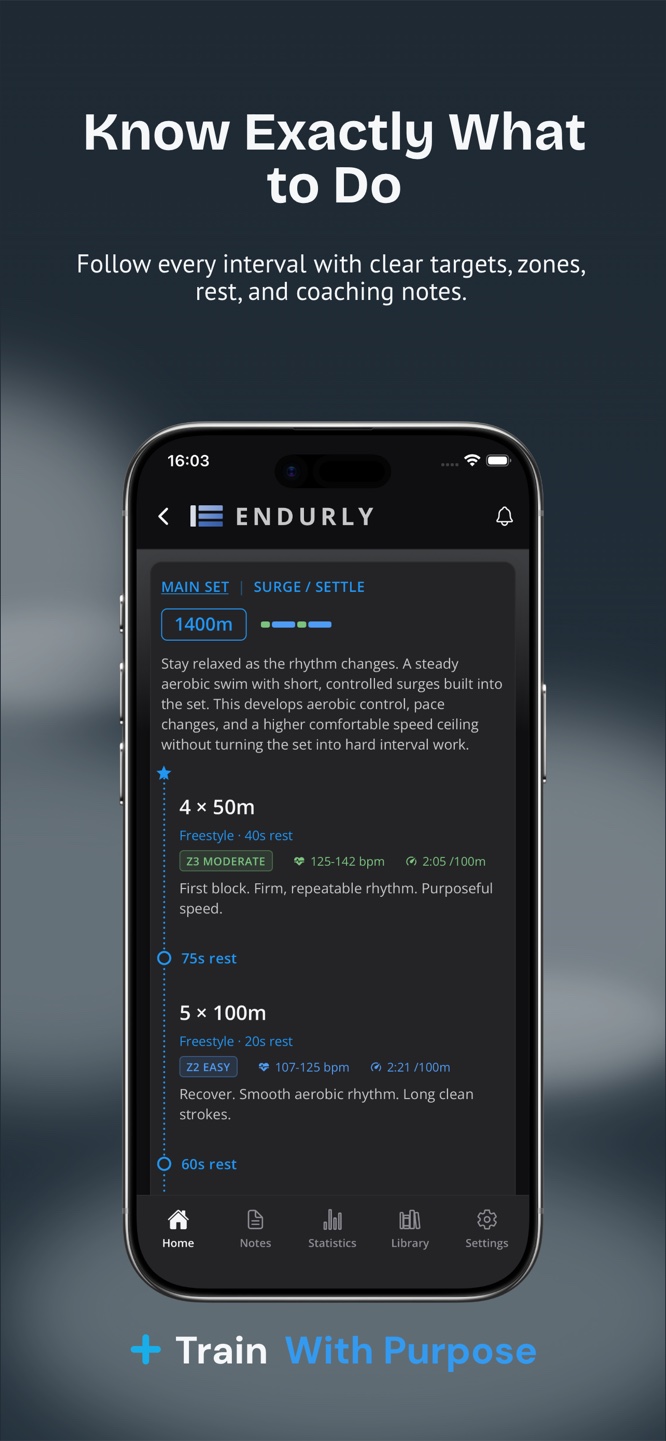
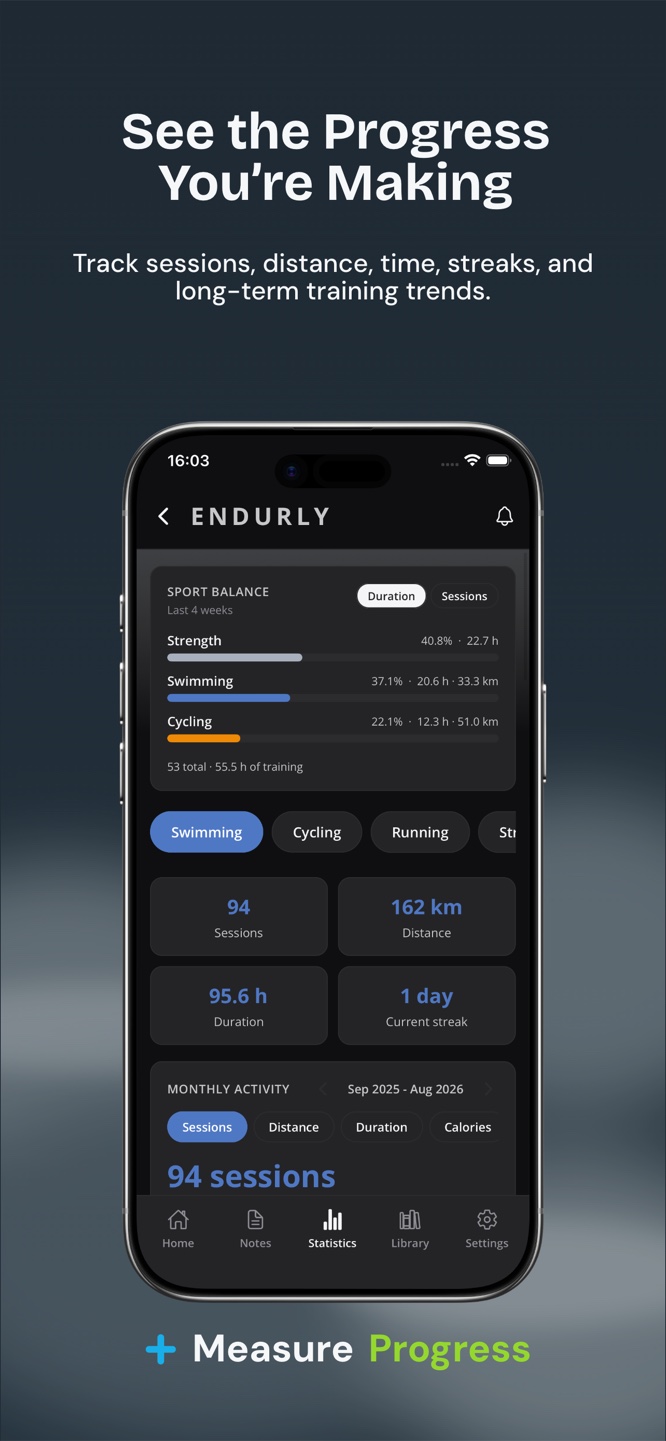
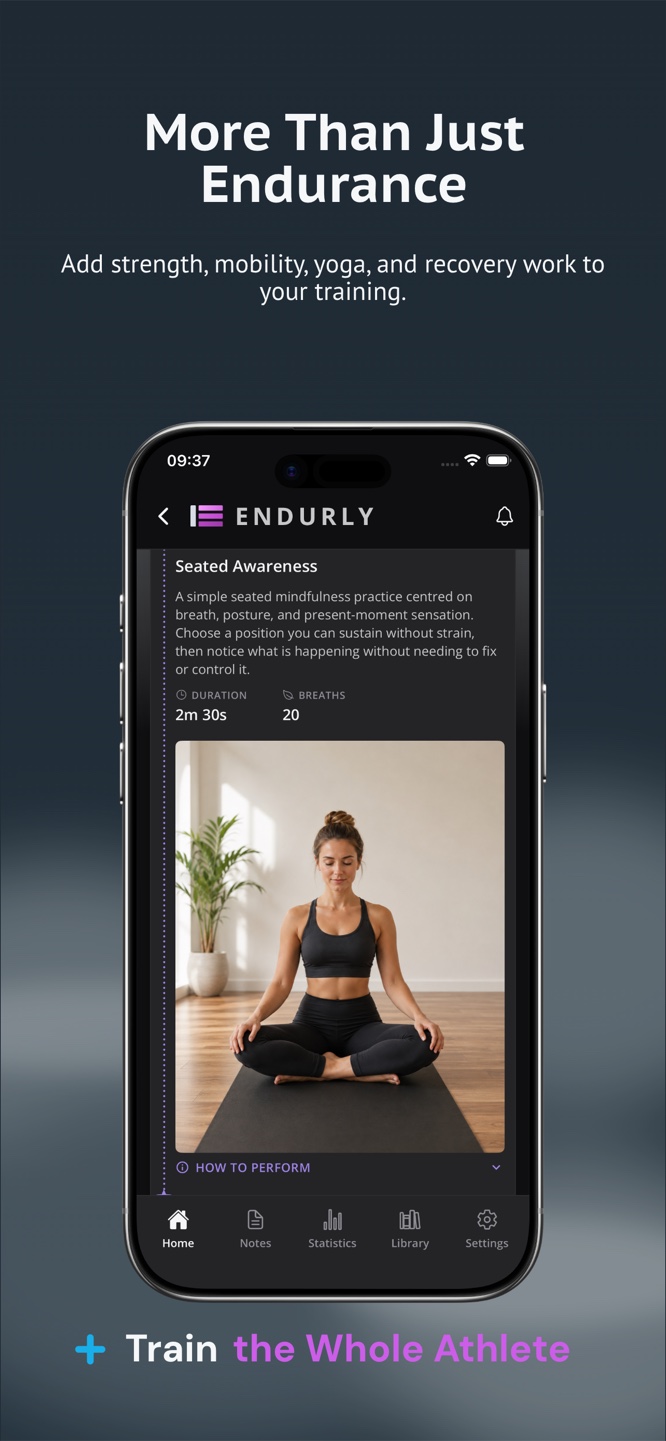
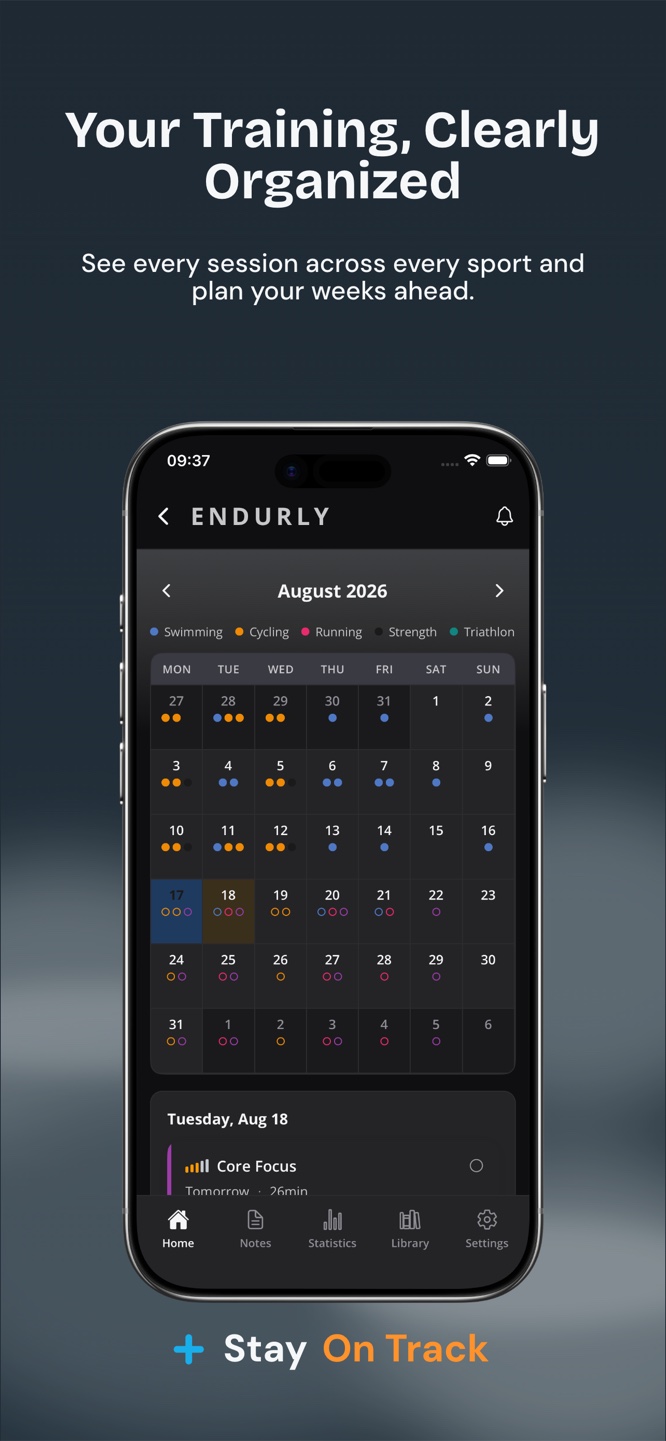
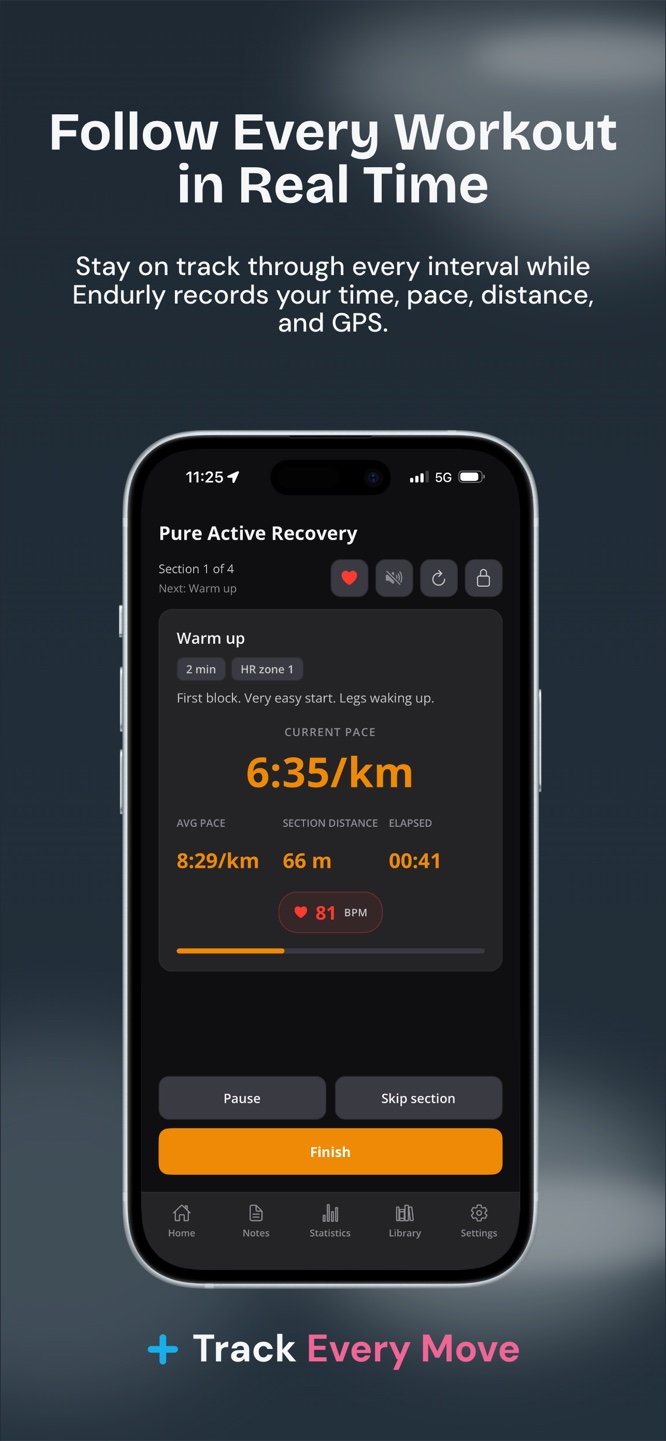
How It Works
Select swimming, pick your training goal (endurance, speed, technique), and set your experience level.
Enter your pool length, select strokes to train, and choose your target distance range per session.
Receive a complete multi-week plan with fully structured sessions, drills, and HR zone targets.
Most recreational swimmers spend their pool time doing the same kind of session over and over: a few warm-up laps, a long steady main set, and a cool-down. It feels productive because the volume is real, but the body adapts to the specific stress it sees most often. After a few months the gains plateau, and the only way out is to either swim much more or train smarter. Endurly's swim generator chooses the second path. Every session is built around a clear physiological intent — base aerobic, threshold tolerance, technique reset, fast-twitch recruitment, or active recovery — and the intent is what shapes the structure: the rep distance, the rest interval, the stroke choice, the equipment, and the order of the work. That intent is also what makes a 2-kilometre session genuinely different from another 2-kilometre session you swam last week.
Structured sessions also unlock an honest kind of progression. Once you know exactly what stimulus a workout was supposed to deliver, you can compare like to like across weeks: the same threshold set, the same pull-buoy main set, the same kick ladder. You see whether your average heart rate dropped, whether the holding pace improved, whether the technique cue carried into the main set. That feedback loop is what turns the next twelve weeks into measured improvement instead of mileage for its own sake. Endurly puts the structure in place, the analytics page surfaces the comparison, and you swim. There is no spreadsheet to maintain, no coach to text, and no guessing about whether tomorrow's workout matches today's recovery.
Heart rate is a direct measure of effort, but in the water it lags by a few beats compared to running or cycling and the cool water suppresses it slightly. Endurly handles that translation under the hood. When you set your athlete profile, the generator anchors your training pace ladder to either critical swim speed (CSS) — your sustainable threshold pace, the swimming equivalent of FTP — or to a fallback heuristic if you have not tested. From that anchor every HR zone gets a corresponding pace per 100 metres, so a Z2 set asks you to hold a pace you actually know how to find rather than a heart rate you cannot reliably read mid-stroke. The pace targets show on every interval, and on supported watches they sync over the FIT export so the device prompts you mid-set.
Critical swim speed is worth the twenty minutes it takes to test. The standard protocol is a 400m time trial followed by a 200m time trial after rest, and the difference between the two paces estimates the speed you can hold for roughly an hour. Once your CSS is in your profile, every Endurly session uses it: warmups sit comfortably above CSS pace, threshold sets sit just below it, recovery work is meaningfully easier. The system also re-asks you to test every few months because CSS drifts as you train. The result is a feedback loop where each block of training updates the anchor that shapes the next block — the same way a runner re-tests their threshold pace, or a cyclist re-tests FTP.
Technique work is what separates a swimmer who can put in 5 kilometres comfortably from one who slogs through 2 kilometres of fatigue. Drills isolate one piece of the stroke — the catch, the rotation, the body line, the breathing pattern — and remove the others so the brain can rewire the movement. The catalogue inside Endurly carries hundreds of drills tagged by stroke, by drill family (so the variant 25/25 versions count as one skill), and by equipment requirement. The session generator picks drills that match the day-focus theme: a Distance Per Stroke session reaches for catch and pull drills, a Body Position day reaches for streamline and rotation drills, a Breathing day reaches for hypoxic and side-breathing drills. Drills appear in the warm-up to wake the stroke up, and they appear in the technical phase as concentrated practice with the appropriate alternation pattern.
What makes the drill rotation feel coached rather than random is the recency layer. The selector tracks which drills you have done recently across the block and softly demotes them so the next session reaches for fresh material. When the drill pool is naturally narrow — kick-themed days, paddles work, snorkel-required catches — the selector falls through to the least-recently-used family before defaulting to a repeat, and a downgrade gate stops a wide alternating archetype from shipping with only one drill where it should have three. None of this is something you set up; it just produces sessions that actually feel different from each other across a 6-week block, with each session built around the intention you asked for at the start.
A serious swimming week is rarely all hard. The Balanced General progression template inside Endurly cycles weeks through different focuses — technique, endurance building, kick development, speed development, pull and arm work — and inserts a recovery week every fourth slot. Inside each week, the day-focus rotation matches the week's theme: a kick week stacks five kick-themed days, but each day pulls from a different drill pool and works at a slightly different intensity. The volume scales week over week with progressive overload, then drops on the deload week so the adaptations the previous block stored actually surface. You can swap to other progression templates from the start screen, or build your own block manually if your race calendar requires a different shape.
What makes the structure work for working adults — not just dedicated club swimmers — is the calibration to time, not just to fitness. You tell Endurly how long each session should be and how many days per week you can train, and every session is generated to fit that envelope. A 45-minute session with technical priorities looks different from a 45-minute session with endurance priorities, and both look different from a 90-minute session of the same theme. The generator also respects pool length: 25-metre and 50-metre pools produce different rep distances because the same percentage of CSS pace lands at different lap counts. The end result is a complete multi-week swim plan that feels designed for your pool, your schedule, and your current level of fitness, ready to take to the water this week.
Training Insights
Hard training feels productive. But it's not always effective. Progress comes from stress, recovery, and repeat. If you skip recovery, you skip improvement. Easy days are part of the plan — not a weakness.
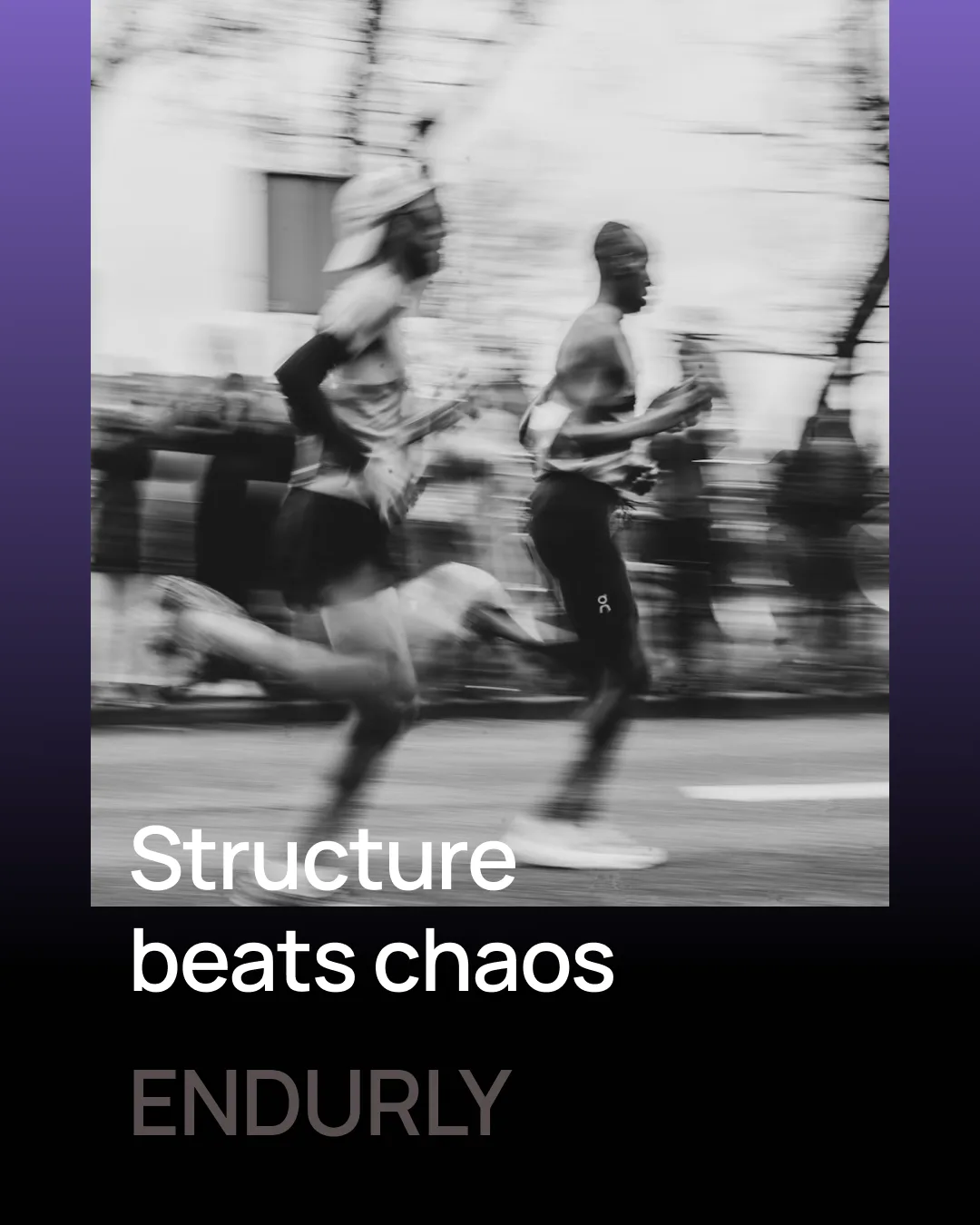
Intervals stop working when they become random. No structure means no progress. You need clear pace, clear recovery, and clear purpose. If every session feels different for no reason — it's noise, not training.

Most training happens in the middle. Not easy enough to recover, not hard enough to improve. That's the danger zone. Easy days should be easy. Hard days should be purposeful. Avoid the grey zone.
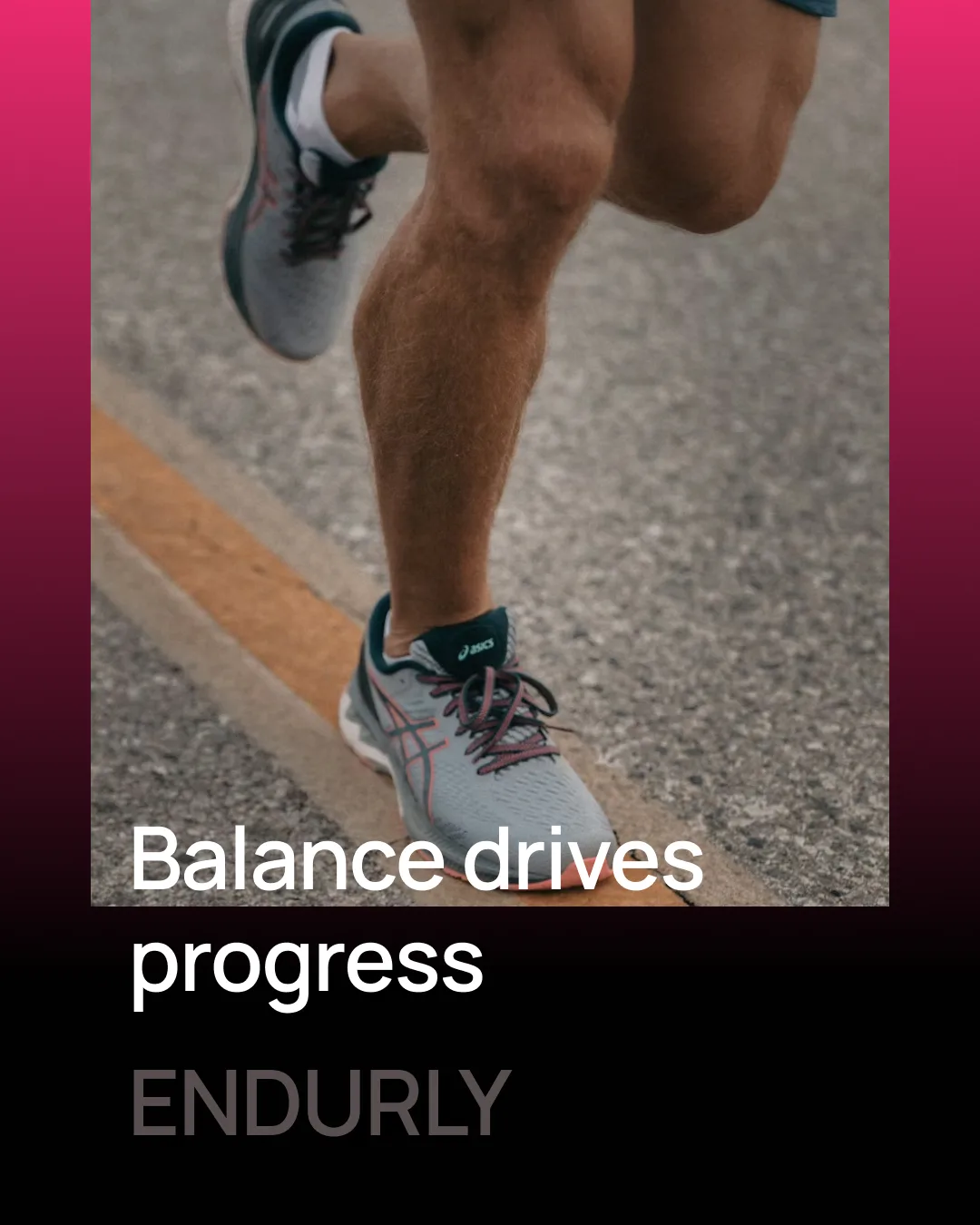
Feeling stuck usually means something is off balance. Too much intensity or not enough structure. Progress needs consistency, recovery, and clear sessions — not just more effort.
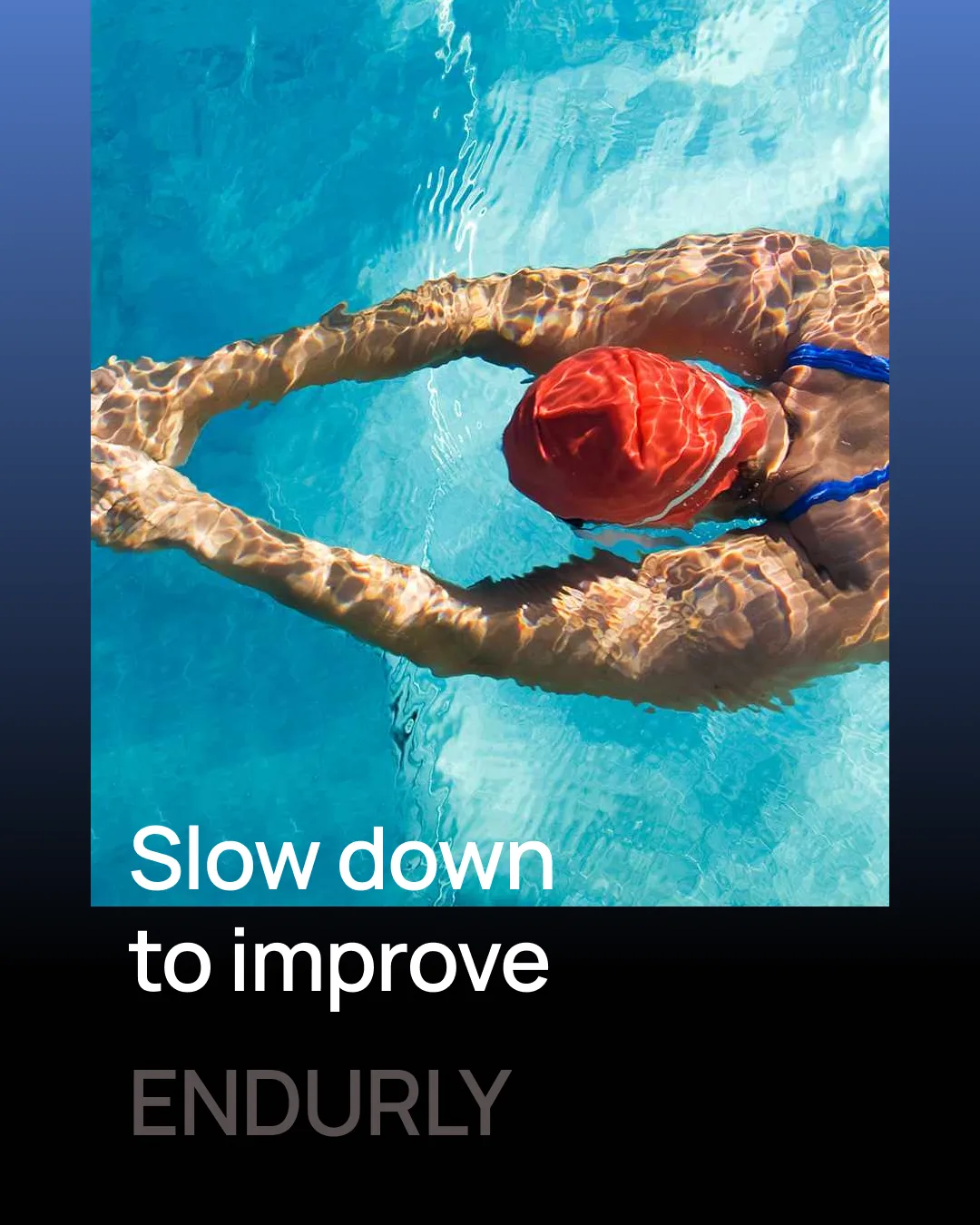
This is the most common mistake. If you can't talk easily, it's not an easy run. Slowing down feels wrong at first. But it builds the base. Run slower. Get faster.
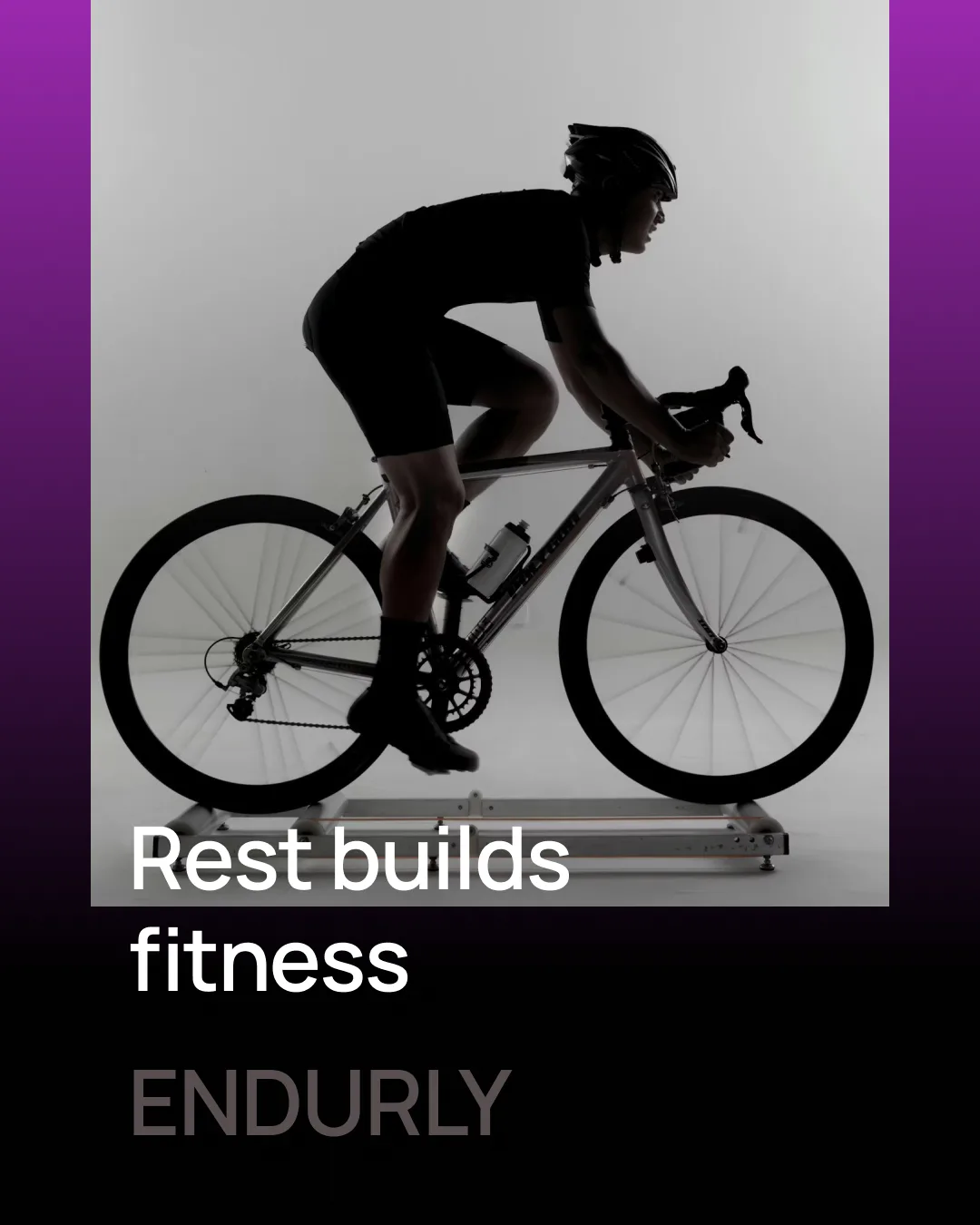
Rest is not doing nothing. It's part of the process. Training breaks you down. Recovery builds you up. Without rest, there is no adaptation. Rest days move you forward.
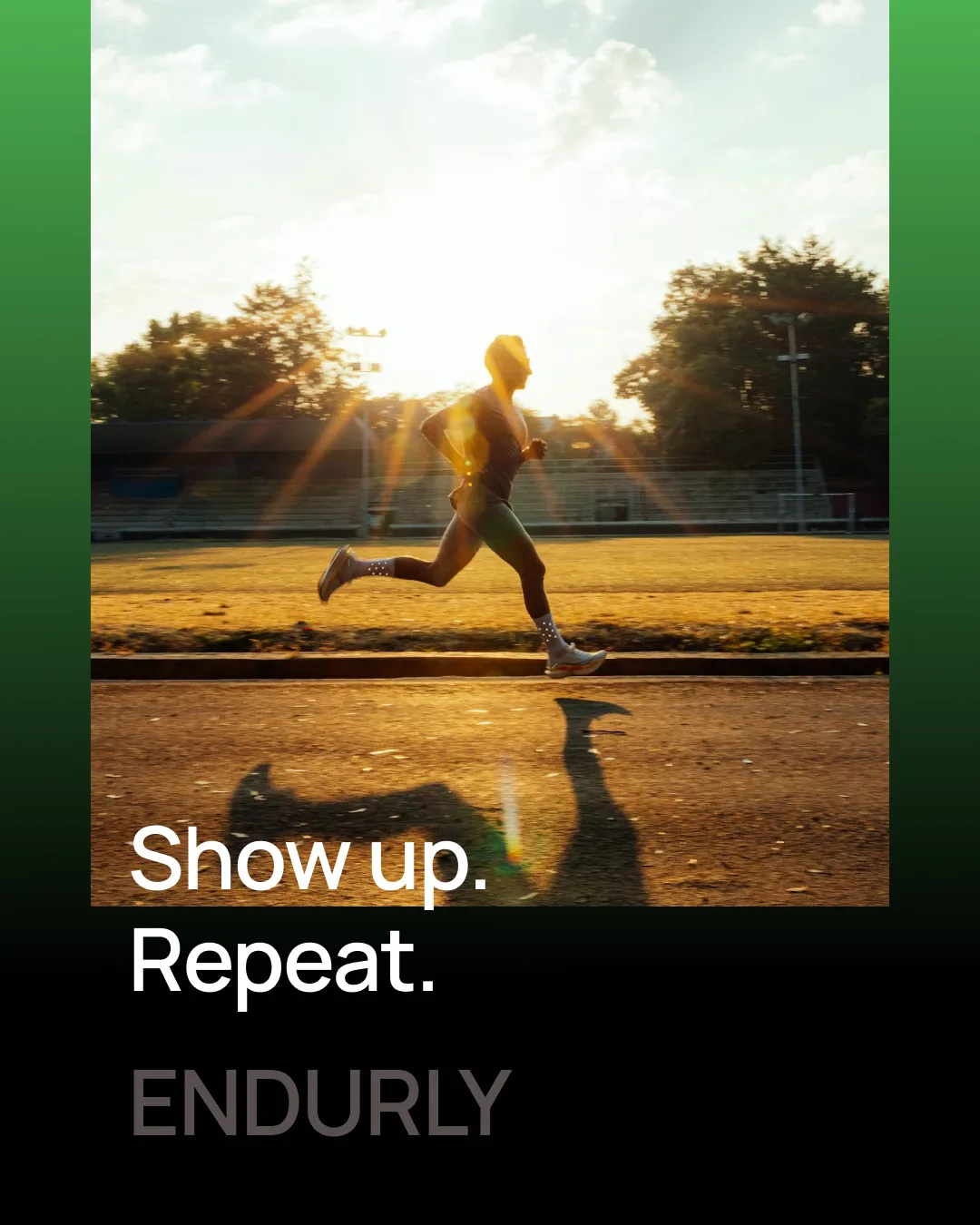
Motivation comes and goes. Consistency stays. You don't need perfect sessions — you need regular ones. Small sessions done often beat rare perfect workouts. Show up. Repeat.
Yes. Endurly is free to sign up and generate workouts. Optional premium features are clearly marked in the app.
Yes. Pick the beginner training level and Endurly scales every workout to a safe, foundational load with clear coaching cues.
Yes. Endurly exports to Garmin, Suunto, and Wahoo via native integrations and structured .FIT files.
No. Endurly generates a workout without personal zones and progressively personalises as you record sessions.
Create your free account and generate your first swimming plan in under a minute.
Start Swimming Free